


Written by the C&G Holsters team, founded by a retired Law Enforcement Officer and Master Firearms Instructor, and staffed by U.S. Military Veterans, LEOs, and competitive shooters.
The Most Dangerous Moment in Concealed Carry Isn't What You Think
You passed your CCW class. You hit your targets. But the range didn't teach you how to carry. That gap between shooting proficiency and carry readiness is where people get hurt.
Here's the truth most new carriers don't hear: the reholster, not the draw, is statistically the highest-risk moment in daily concealed carry. According to research published in Applied Ergonomics, nearly 75% of unintentional discharges in law enforcement happen during routine tasks like holstering, not during active engagements. The CDC reports approximately 16,000 accidental firearm injuries in the U.S. each year, with 80% attributed to user error.
With 29 states now allowing permitless carry, millions of new carriers may never receive formal holster safety instruction. This article lays out seven affirmative habits to build before that gun ever leaves the range for the first time.
Habit 1: Treat Your Holster as a Safety Device, Not a Carrying Convenience
Most new shooters think of a holster as something that holds their gun. That's incomplete. Your holster is the primary mechanical safety system standing between a loaded firearm and a negligent discharge. It needs to be treated that way.
A quality holster covers the trigger guard completely and prevents any external object from manipulating the trigger while the firearm is seated. This is non-negotiable. Soft nylon holsters present a direct risk: the material can be pressed into the trigger guard during reholstering, or the holster can collapse inward, creating a path straight to the trigger.
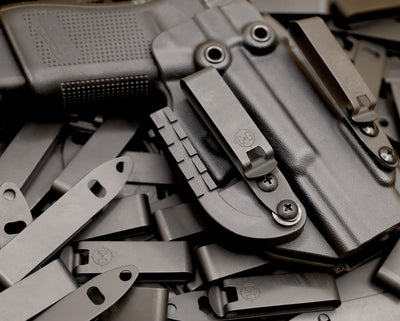
Rigid Kydex construction eliminates this risk by design. The material holds its shape under pressure and keeps the trigger guard locked away from contact. Holster material is a safety decision, not a comfort or budget decision. Your holster, belt, and firearm must function as one trained unit. That gear-system mindset starts here.
Habit 2: Confirm the Audible and Tactile Click Every Single Time
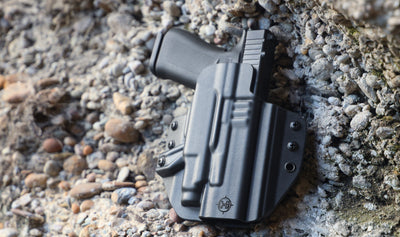
A precision-molded Kydex holster produces a distinct audible and tactile click when the firearm is fully seated. That click confirms the trigger guard is locked in and the weapon is secure. This positive retention confirmation is a critical feedback mechanism that generic or universal-fit holsters simply cannot reliably provide.
Train this as a non-negotiable checkpoint: if you don't hear and feel the click, the gun is not holstered. Period. Most new shooters don't even know this gap exists because they've never handled a precision-fit holster.
Our GEN6 Glock 19/23/44/45 IWB and OWB Kydex holsters are CNC-machined from custom molds and fit-tested before shipment, delivering that positive retention confirmation on every seat. Drill this habit at the range with dry-fire repetitions before you ever carry live. Think of the click as the mechanical equivalent of a safety check.
Habit 3: Slow Down, Deliberately, Before Every Reholster
The psychology here is straightforward and dangerous. When you reholster, the perceived threat is over. Your adrenaline is fading. Your brain wants to move on. This is exactly the moment when negligence happens.
Build a deliberate pause into your reholstering sequence: stop, breathe, reset, then holster. That pause is a trainable, repeatable behavior, and it needs to become automatic. Remember: nearly 75% of law enforcement unintentional discharges occur during routine tasks. Speed is the enemy during reholstering.
Contrast this with the draw. Speed on the draw is a trained skill. Speed on the reholster is a liability. As our founder has taught for decades: there is no timer on the reholster. No threat requires you to be fast going back in. Practice slow, deliberate reholsters at the range until the pause is second nature.
Habit 4: Clear Your Cover Garment Before the Muzzle Enters the Holster
This is a standalone, non-negotiable habit, not a passing tip. A shirt tail, jacket hem, or drawstring caught in the trigger guard during reholstering is a direct negligent discharge mechanism. It has happened, and it will keep happening to carriers who don't train this motion.
The procedure: use your support hand to sweep the cover garment fully clear before the muzzle breaks the holster mouth. Every time. No exceptions. Practice this motion in dry-fire at the range until it's muscle memory you don't have to think about.
This habit is especially critical for IWB carriers, where the garment sits closer to the holster mouth and contact with the trigger guard is more likely. A stable gun belt helps here too. It keeps the holster mouth in its trained position, making garment clearance consistent rep after rep.
Habit 5: Keep Your Trigger Finger Straight and Indexed Until Fully Seated
Jeff Cooper's Four Rules remain the universal foundation of all modern firearms training doctrine. Trigger discipline and muzzle discipline are the two most frequently violated rules observed at ranges by instructors, according to Concealed Carry Inc.
Your trigger finger must be straight, high on the frame, and indexed above the trigger guard for the entire reholstering motion. Not just during the draw. The entire motion. The IDPA 2026 rulebook codifies trigger finger discipline as the non-negotiable standard even in competitive shooting.
Here's why it matters: approximately 25% of law enforcement unintentional discharges are attributed to involuntary sympathetic squeeze (muscle co-activation). A finger resting near the trigger during reholstering is catastrophic if your hand clenches involuntarily. Drill this at the range. Have a partner or instructor call out your trigger finger position during every reholster repetition. This habit must be grooved at the range before it can be trusted on the street.
Habit 6: Never Muzzle Your Own Body During the Draw or Reholster
Muzzle discipline is the other most-violated Cooper rule observed by range instructors. For new IWB carriers, the risk is specific: a poor draw angle or incorrect holster position can cause the muzzle to sweep your support hand, thigh, or lower body during the draw or reholster cycle.
Holster cant, ride height, and body position must be trained together. These are not variables you improvise on the street. At the range, practice the full draw-to-target and target-to-holster cycle with deliberate attention to muzzle direction throughout every repetition.
A properly positioned holster at the correct cant eliminates most muzzle-sweep risk by design. But that only works if the holster stays where you trained it. A quality gun belt that doesn't sag or shift keeps the holster in its trained position, preserving safe draw geometry every time you reach for it.
Habit 7: Build Your Gear System: Belt, Holster, and Firearm Train Together
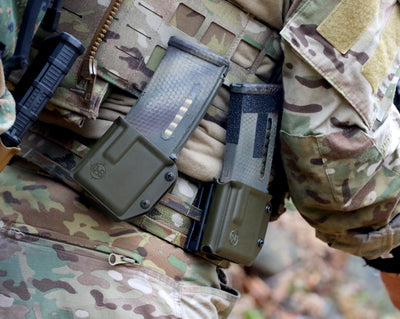
Most new carriers treat holster selection in isolation: pick a holster, clip it on a belt, figure it out. But the belt, holster, and firearm are one mechanical system. They need to be selected, fitted, and trained as a unit.
Many new concealed carriers use regular belts. The result: holster sag, shifting, and printing. All of these degrade draw consistency and compromise safe reholstering by moving the holster mouth out of its trained position. A holster that shifts makes every other safety habit on this list harder to execute.
A purpose-built gun belt keeps the holster mouth stable, indexed, and accessible, exactly where your dry-fire training placed it. Dry-fire is the bridge between range training and real-world carry. Train the full system together at home before carrying live. The gear you train with must be the gear you carry. No substitutions on the street.
Before You Leave the Range: Your 7-Habit Pre-Carry Checklist
Before your first live carry day, confirm you've built these habits through deliberate repetition:
- Holster as safety device: Your holster fully covers the trigger guard and holds its shape under pressure.
- Confirm the click: You hear and feel positive retention confirmation every time the firearm seats.
- Deliberate pause: You stop, breathe, and reset before every reholster. No rushing.
- Clear the garment: Your support hand sweeps the cover garment clear before the muzzle enters the holster.
- Trigger finger indexed: Your finger is straight and high on the frame throughout the entire reholstering motion.
- Muzzle discipline: You never sweep your own body during the draw or reholster cycle.
- Gear system trained: Your belt, holster, and firearm have been trained together as one unit in dry-fire before live carry.
With 46.8% of Americans now living in Constitutional Carry states, self-education has never been more critical. States like Colorado have responded with mandated training requirements under HB24-1174, requiring 8 hours of instruction and live-fire qualification. That's a signal: competency matters, and the responsibility falls on you.
Building these habits at the range is the mark of a responsible, mission-ready carrier. At C&G Holsters, every holster we make is designed and manufactured in the USA by veterans and law enforcement professionals, CNC-machined to precision, and fit-tested before it ships. Now in our 6th generation of holster designs, we build gear that supports every one of these safety habits by design.
Carry with confidence. Carry with purpose. For all that you hold close.
Sources
- O'Neill et al., "Further Analysis of the Unintentional Discharge of Firearms in Law Enforcement," Applied Ergonomics, 2018
- Guns.com, "The Human Factor in Involuntary Discharges" (citing CDC data)
- Worldmetrics.org, "Accidental Gun Discharge Statistics"
- Concealed Carry Inc, "The 3 Most Common Safety Violations at the Gun Range"
- IDPA 2026 Rulebook
- Crime Prevention Research Center, "Concealed Carry Permit Holders Across the United States: 2025"
- Colorado Handgun Safety, "Colorado's New 2025 Concealed Carry Law"





Leave a comment