


Constitutional Carry Just Changed the Rules
As of 2026, 29 U.S. states have enacted constitutional carry laws, covering approximately 157.6 million Americans, nearly 47% of the population. Twenty-eight of those states adopted permitless carry in just 22 years, with Louisiana, South Carolina, and West Virginia among the most recent additions.
The numbers tell the story. According to NSSF's 2025 Industry Economic Impact Report, an estimated 3.9 million new gun owners entered the market in 2024 alone. First-time buyers made up 25.6% of all retail firearm customers that year, per NSSF's 2024 Firearm Retailer Survey.
Carry rates reflect the shift. In constitutional carry states, 34.19% of respondents carry at least occasionally, compared to 25.98% in permit-required states. That 8-point gap represents millions of new, less-guided carriers entering the holster market. Constitutional carry removes the permit requirement and, with it, the mandatory training pipeline that once guided new carriers toward informed holster decisions.
More people are legally carrying than ever before, but fewer are receiving structured guidance on the single piece of gear that determines whether they survive a lethal encounter.
Why the Holster Decision Matters More Than Most New Carriers Realize
Pew Research (July 2024) found that 72% of gun owners cite personal protection as their primary motivation for owning firearms. That means most new carriers are choosing a holster for a life-safety role, not recreation. The holster is not an accessory. It is the interface between you and the tool you may need to save your life.
The most common and costly mistake new gun owners make is buying a generic "fits most" holster that lacks model-specific retention and proper trigger guard coverage. These holsters allow movement inside the shell, create inconsistent draw strokes, and can leave the trigger exposed to objects that should never be near it.
Then there's the "holster tax." New carriers routinely spend $600 to $900 on a firearm and then pair it with a $25 nylon holster. When that holster fails them at the range or prints through every shirt they own, they buy another. And another. Three cheap holsters later, they've spent more than a quality setup would have cost from the start.
A purpose-built gun belt is non-negotiable in this equation. A standard fashion belt flexes, collapses, and causes the holster to tilt outward, creating visible printing and an inconsistent draw stroke. The full system, holster plus belt plus draw practice, must be treated as one integrated setup.
Kydex has become the preferred material for new carriers over leather, and for good reason. It offers consistent retention, durability, full trigger guard protection, and compatibility with optics and weapon lights. According to 6W Research, this shift is accelerating across the U.S. market. Material choice is a safety decision, not a preference.
The global holster market reached $2.8 billion in 2025 and is growing at a CAGR of 3.9%, with the Personal Defense segment expanding fastest at 4.8%. That growth reflects exactly who is buying holsters right now: people who carry for protection, not sport.
OWB vs. AIWB: The Tactical Argument New Carriers Aren't Hearing
Most beginner-focused holster content defaults to recommending OWB (outside the waistband) as the "safest for beginners." As a company founded by a retired Law Enforcement Officer and Master Firearms Instructor, we think that framing ignores a critical life-safety argument that experienced carriers and law enforcement professionals raise constantly.
OWB carry is a tactical liability in self-defense scenarios. A visible firearm immediately identifies the carrier as the first target to any attacker who enters a space. The element of surprise is gone before the threat has even escalated. If everyone around you can see your gun, you've already surrendered the initiative.
Real-world data backs this up. From 2002 to 2011, 5.1% of the 543 police officers feloniously killed were killed with their own weapon after being disarmed. That is a direct consequence of a visible, accessible firearm in a threat environment. Officers carry openly because duty requirements demand it. You, as a civilian, have a choice. Use it.
Concealment is a force multiplier. A carrier who has not been identified as armed retains the initiative in a lethal encounter. An OWB carrier has already given it away.
AIWB (appendix inside-the-waistband) carry has become the dominant carry method among experienced carriers in 2026, driven by improvements in holster design: concealment claws, foam wedges, adjustable ride height, and adjustable cant. These features solve the comfort problems that kept earlier generations of carriers on the hip.
The most common safety objection new carriers raise about AIWB is muzzle direction. The fact: IDPA changed its rules in 2022 to allow appendix carry in competition, and no casualties from the practice have been reported. A properly holstered firearm with full trigger guard coverage does not fire itself.
Our direct guidance to new shooters: start with AIWB, not OWB. The discomfort of learning appendix carry is a far smaller cost than surrendering the tactical advantage of concealment in a real threat. Coming home safe matters more than a comfortable first week.
The Speed Advantage: What Draw Time Data Says About AIWB
AIWB draw times to first shot are consistently 0.15 to 0.25 seconds faster than strong-side IWB carry. That margin is tactically significant when fractions of a second determine outcomes.
One independent timed comparison recorded average concealed draw times of 1.34 seconds for AIWB versus 1.54 seconds for strong-side carry at 10 yards. A 0.20-second difference. In a lethal encounter, that gap can determine whether you get your shot off first.
New carriers deserve to know this data exists and that holster position directly affects survivability. Draw speed is only meaningful, however, when paired with a consistent, repeatable draw stroke. That requires a holster molded specifically to your firearm model, not a universal fit that shifts in the waistband.
Building Your First Carry Setup the Right Way
A first carry setup is a system, not a single product. Holster, purpose-built gun belt, and consistent draw practice must be selected and trained together. Buying them separately without considering how they interact is how new carriers end up with gear that fights them instead of working for them.
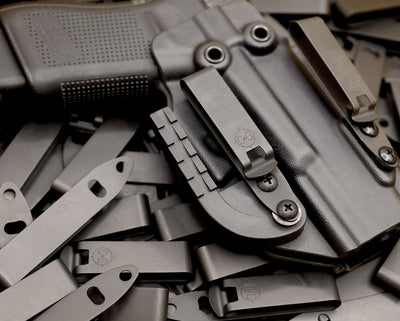
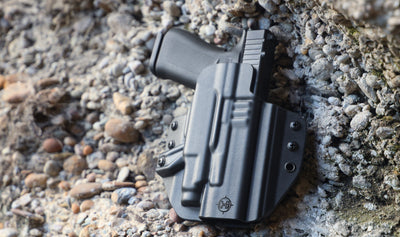
Choose a holster that is CNC-machined or precision-molded to your exact firearm model. Model-specific fit ensures secure retention, proper trigger guard coverage, and a consistent draw every time you reach for it. For new Glock carriers, a model-specific IWB Kydex holster like the GLOCK 19/23/44/45 IWB COVERT/ALPHA Quickship delivers that precision fit with trigger guard protection and ships within 5 days, so first-time carriers aren't waiting weeks to start training.
Invest in a rigid, purpose-built gun belt. It is the foundation of the entire carry system and directly affects whether the holster stays in position, conceals properly, and allows a repeatable draw. A $15 leather dress belt will fail you. Plan accordingly.
Dry-fire draw practice from concealment is non-negotiable for new AIWB carriers. The holster and belt mean nothing without repetitions that build muscle memory before a real threat occurs. Clear the firearm, verify it is empty, and run your draw from concealment until the motion is automatic.
One more point worth noting: women now comprise nearly three-quarters of first-time gun buyers, up from slightly less than half in 2020. Holster fit, ride height, and cant adjustability matter differently across body types. New female carriers should prioritize holsters with adjustable geometry over one-size recommendations written for a male frame.
What New Carriers in Constitutional Carry States Should Do First
Constitutional carry removes the legal barrier to carry. It does not remove the responsibility to carry safely, tactically, and with a purpose-built setup.
Seek out training even when it is not legally required. A retired law enforcement officer or master firearms instructor can compress years of carry experience into a single course. That investment pays for itself the first time you draw from concealment under stress.
Prioritize concealment from day one. The legislative freedom of constitutional carry is most valuable when paired with the tactical freedom that concealment provides. You have the right to carry openly in many of these states. The smarter choice is to carry where no one knows you're armed.
Commit to American-made, precision-manufactured gear from brands staffed by people who have carried professionally. At C&G Holsters, our team includes U.S. Military Veterans, LEOs, and competitive shooters. The holster market is flooded with cheap imports that fail the standards that matter in a real encounter. According to Credence Research, the holster market is growing fastest in Southeast and Mountain-West states, exactly where the newest constitutional carry laws have taken effect. New carriers in these regions are making first-holster decisions right now with the least guidance available.
Constitutional carry is a right. Carrying effectively is a responsibility. It starts with choosing the right holster setup from day one.
Sources
- Constitutional Carry States 2026 — Alien Gear Holsters
- Constitutional Carry States 2026 — Freedom's Lodge
- 2025 NSSF Firearm & Ammunition Industry Economic Impact Report
- NSSF 2024 Firearm Retailer Survey
- Survey: More Americans Are Carrying Concealed Guns — Reason.com
- Pew Research (July 2024) via TheGunMag
- U.S. Holster Market Outlook — 6W Research
- Holster Market Size, Share & Forecast 2025–2034 — DataIntelo
- Citizens, Here's Why You Should Conceal Carry Your Firearm — Police1
- Appendix Carry — Backwoods Home / Massad Ayoob
- Appendix vs. Strong-Side Carry — NY Safe Inc.
- NSSF Industry Research Report: First-Time Gun Buyers
- U.S. Concealed Gun Holsters Market — Credence Research





Leave a comment