


You're a Cop 24/7 — Is Your Off-Duty Holster Ready?
The badge doesn't clock out. But the duty rig does. What replaces it when you walk out the door in jeans and a t-shirt matters just as much as the Level III on your belt during a shift.
Most law enforcement agencies encourage or require off-duty carry, with nearly all mandating concealment when officers are in plain clothes, according to Inside Safariland. The legal framework backing that carry is LEOSA (HR 218), which grants qualified active and retired officers nationwide concealed carry rights across all 50 states and U.S. territories, as outlined by the FBI Law Enforcement Bulletin.
The stakes are rising. In March 2026, the LEOSA Reform Act was introduced in the U.S. Senate to expand those carry rights to venues currently governed by federal law, putting even more emphasis on a proper off-duty setup. This guide will help you build a reliable, concealment-focused holster system that matches real-world demands.
Off-Duty Carry Is Different — Here's Why Your Duty Holster Stays at the Station
Your duty holster is built for a uniformed, open-carry environment. It features Level III active retention, multiple locking mechanisms, and a high-ride profile designed to work with a duty belt and body armor. Strap that rig under a polo shirt and you'll print like a billboard.
Off-duty carry flips the priority. Instead of active retention, you're working with passive retention: friction-fit Kydex or molded leather that secures the firearm through precise fit rather than mechanical locks. Accessibility and speed from concealment take priority over weapon-snatching resistance, because the threat model is fundamentally different when you're not in uniform.
This is where the gray man philosophy comes in. Off-duty, your goal is to blend into civilian environments without telegraphing that you're armed. Holster profile, printing, and overall concealment become critical. Concealed carry is strongly preferred over open carry off-duty because it preserves the element of surprise and avoids making you a primary target in a threat situation.
There's a legal dimension too. Most jurisdictions require officers to carry only a pistol they've qualified with, as noted by Police1. That makes holster-firearm compatibility both a tactical and legal consideration. Your off-duty holster must be built for the exact gun you're authorized to carry.
IWB vs. OWB: Choosing the Right Carry Style for Off-Duty
IWB holsters are the most popular off-duty carry style for law enforcement. According to an Officer.com survey, IWB (across all positions) beats OWB by approximately 12% among officers. The reason is straightforward: concealability. An IWB holster tucks the firearm inside the waistband, reducing the profile against your body and making it far easier to hide under a single layer of clothing.
The two primary IWB carry positions are strong-side hip (3 to 4 o'clock) and appendix (AIWB at 1 to 2 o'clock). AIWB is growing among law enforcement for its speed and deep concealment, though it requires a properly designed holster with a full sweat guard and adjustable cant to carry safely and comfortably.
OWB still has a role off-duty. Under a jacket or untucked flannel in cooler months, an OWB holster offers a faster draw and more comfort, especially with a full-size handgun. Many experienced officers run a seasonal carry strategy: OWB with a full-size in winter, IWB with a compact in summer. Building a system for both is the smart move.
OWB for Off-Duty: When a Tactical Holster Makes Sense
OWB carry off-duty works best when a cover garment is already part of your wardrobe. A jacket, an untucked button-down, or a hoodie can all conceal an OWB rig effectively during cooler months.
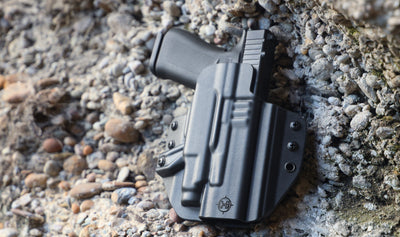
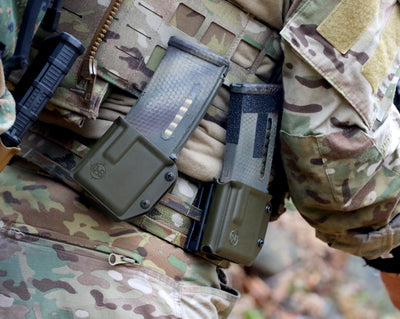
The key distinction: a purpose-built OWB tactical holster is not the same as your duty rig. You need a lower ride height, a closer body profile, and civilian-compatible hardware. C&G Holsters' OWB Tactical Kydex Holster line, available in both Quickship and fully custom configurations with an optional combo magazine holder, is built for exactly this role: American-made Kydex, CNC-molded for a specific handgun, with audible Posi-Click retention confirmation.
A model-specific OWB holster outperforms any universal-fit option for daily off-duty carry. Consistent draw, no slop, no guesswork. That consistency matters when seconds count.
Kydex vs. Leather: What the Data Says About Off-Duty Holster Materials
Kydex is the most preferred material for off-duty holsters among law enforcement officers, edging out leather by approximately 4% in officer surveys. Molded holsters (Kydex and leather combined) account for 90% of responses. The preference is clear, and the reasons are practical.
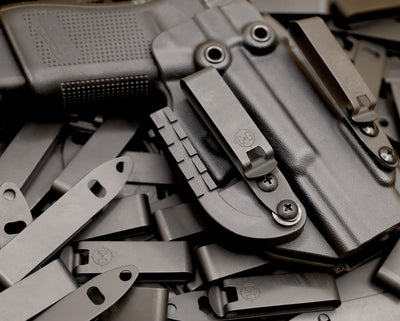
Kydex delivers consistent retention regardless of sweat or humidity. It provides an audible click on re-holster so you know the gun is seated. There's no break-in period. It's easy to clean. Polymer and Kydex holsters now hold approximately 45% of the global holster market share, according to Business Research Insights, reflecting broad adoption across law enforcement and civilian carry.
Modern Kydex technology in 2026 has pushed the material even further. Today's holsters include optic cuts for red dot sights (critical as Glock MOS and SIG P320 RXP platforms become standard), light-bearing compatibility, and concealment claws to reduce printing, as noted by Warriorland.
Precision-fit Kydex, formed on CNC aluminum molds for a specific handgun model, outperforms universal-fit holsters every time. The exact fit means a consistent draw stroke and zero movement under the garment. That's physics, not a marketing claim.
Leather still has its place. A quality leather IWB holster can be comfortable against the body, and some officers prefer the feel. But leather requires a break-in period and is more susceptible to sweat degradation over time. For daily off-duty carry in variable conditions, Kydex wins on reliability.
Light-Bearing Holsters: The Off-Duty Consideration Most Officers Miss
Adding a weapon-mounted light to your off-duty gun changes everything about holster selection. A Streamlight TLR-7 or SureFire X300 alters the firearm's dimensions enough that a standard holster becomes incompatible and unsafe. A purpose-built light-bearing holster specific to both the handgun model and the light model is non-negotiable.
This is a critical gap in LE-focused content. Light-bearing IWB holsters for off-duty concealed carry are rarely discussed, despite growing WML adoption on compact carry guns. If you're running a light on your off-duty pistol, you need a holster molded to that exact configuration. No universal-fit solution works safely here.
The same logic applies to optics. As red dot sights become standard on duty pistols, officers increasingly want them on their off-duty guns too. A holster with a proper optic cut accommodates the sight without interfering with the draw. A precision-fit, light-bearing, optic-cut Kydex holster molded to exact specifications is where custom or model-specific options become the only responsible choice.
The Off-Duty Training Gap: Your Holster Is Only as Good as Your Reps
Here's an uncomfortable truth: most departments encourage off-duty carry but provide zero dedicated training for plainclothes or off-duty scenarios. Officers typically only qualify in full duty gear, according to American Police Beat Magazine.
That training gap makes holster familiarity and daily dry-fire practice critical. Drawing from concealment under a cover garment is a fundamentally different motor skill than drawing from a duty rig. A t-shirt draw is different from a jacket draw. Muscle memory must match the real-world scenario you'll actually face.
Practice drawing from your off-duty holster in the clothing you actually wear. Do it regularly. Build those reps until the motion is automatic.
Holster selection directly impacts training quality. A holster with consistent retention, a defined draw stroke, and audible re-holster confirmation builds reliable muscle memory faster than one with sloppy fit or inconsistent feedback. The National Institute of Justice has been developing standards specifically for duty holster retention, underscoring the life-safety stakes of holster performance at every level.
Build Your Off-Duty Holster System: Key Checklist Before You Buy
- Check your department's off-duty carry policy. Some agencies require specific weapon types, approved holsters, or maintained qualification. Holster choice is a compliance issue, not just a preference. Urban Carry Holsters provides a useful overview of these policy variations.
- Confirm your firearm qualification. The handgun you carry off-duty must be one you've qualified with. Most jurisdictions legally require this.
- Decide on carry position. IWB strong-side, AIWB, or OWB. Base the decision on your seasonal wardrobe and body type. Plan for both summer and winter setups.
- Verify holster compatibility. Match the holster to your exact handgun configuration: standard, light-bearing, or optic-equipped. Never run a non-compatible holster.
- Choose precision-fit over universal-fit. A model-specific Kydex holster gives you consistent retention and draw stroke. Universal-fit options introduce variables you can't afford.
- Retired officers: confirm LEOSA status. Verify your qualification status and any state-specific requirements before selecting an off-duty carry setup. Your holster system must support your legal carry authorization, as outlined by the Fraternal Order of Police.
Carry With Confidence: The Right Off-Duty Holster Is a Duty Decision
Off-duty carry is a responsibility, not an afterthought. The holster that carries your firearm in civilian life must meet the same standard of reliability as your duty gear. Period.
The key takeaways: IWB for concealment, OWB for cooler months, Kydex for consistency, precision-fit for reliability, and light-bearing or optic-cut compatibility for modern handgun configurations. Build a system, not a single solution.
C&G Holsters was founded by a retired Law Enforcement Officer and Master Firearms Instructor. The team includes U.S. Military Veterans, active LEOs, and competitive shooters. This isn't gear designed by marketers. It's built by people who've carried off-duty themselves, using CNC aluminum molds and American-made materials through six generations of holster design.
Find your exact handgun model in C&G's lineup. Quickship in 5 business days or fully custom. Carry with the confidence your commitment to service deserves.
Sources
- Inside Safariland — Off-Duty Carry: Holster Options for Law Enforcement
- FBI Law Enforcement Bulletin — Legal Digest: Off-Duty Officers and Firearms
- Senator Jon Husted — LEOSA Reform Act Press Release, March 2026
- Officer.com — Off-Duty Holster Preferences for Law Enforcement Officers
- Police1 — Training for Off-Duty/Plainclothes Carry
- Police Magazine — 5 Things to Know When Buying Concealed-Carry or Off-Duty Holsters
- Business Research Insights — Holster Market Size, Trends & Outlook
- Warriorland — 2026 Kydex Holster Technology
- Eclipse Holsters — Complete Guide to Weapon Light-Bearing Holsters
- American Police Beat Magazine — Off-Duty and Plainclothes Carry Considerations
- Urban Carry Holsters — Law Enforcement Concealed Carry Essentials
- Fraternal Order of Police — LEOSA Legal Requirements





Leave a comment