


Your Training Got You Here — But Civilian Carry Is a Different Mission
You survived deployments, annual qualifications, and enough range time to make trigger discipline second nature. Muzzle awareness, situational awareness, weapons handling under stress: these skills are burned into your operating system. But civilian concealed carry operates under rules your drill sergeant never covered.
Here's the core tension: military rules of engagement and civilian self-defense law are fundamentally different legal frameworks. You cannot legally apply ROE to a civilian encounter. Period.
There are approximately 17 million living U.S. veterans in 2026, and roughly 44.9% own firearms, according to the National Firearm Survey. That's a disproportionately high rate compared to the general population's ~32%. This article isn't about starting from scratch. It's about layering civilian-specific skills onto the military foundation you already own.
The Mindset Shift: From Threat Pursuit to Threat Avoidance
Military training is mission-oriented, team-based, and ROE-governed. You had a chain of command, fire team support, and clearly defined escalation protocols. Civilian concealed carry is none of those things. It's solo. It's legally complex. And the primary objective is avoidance, not engagement.
This is the "threat pursuit vs. threat avoidance" distinction that trips up even highly trained veterans. In uniform, you were conditioned to close with and destroy the enemy. As a civilian, the goal is de-escalation and disengagement. Drawing your firearm is the last resort, not the first tool in the kit.
That recalibration takes time. A VFW survey found that the average veteran takes roughly seven months to feel adapted to civilian life. The carry mindset shift is part of that broader transition, and it deserves deliberate attention.
Congress is wrestling with this gap right now. The Special Operations Forces Concealed Carry Act (H.R. 8332), introduced in April 2026 by Rep. Pat Harrigan, would grant nationwide concealed carry to eligible special operations veterans by amending LEOSA. A companion Senate bill introduced by Sen. Sheehy includes a recurring firearms requalification requirement at the veteran's own expense. Even lawmakers recognize that military weapons proficiency and civilian concealed carry involve meaningfully different legal and tactical frameworks.
As of August 2026, H.R. 8332 has been referred to the House Judiciary Committee with no hearing scheduled. Current law has not changed. Veterans must still comply with state-by-state CCW requirements regardless of service record.
Worth noting: many military police veterans are already covered under LEOSA (18 USC 926C), which since 2004 has allowed qualified retired law enforcement to carry concealed nationwide. If you served in an MP or law enforcement capacity, check whether you qualify.
The practical takeaway is straightforward. Civilian carry demands legal awareness and de-escalation skills as primary tools. Your firearm is the backup plan. That posture requires deliberate mental reprogramming, and it's worth every hour you invest in it.
Disclaimer: Use-of-force law varies significantly by state. Consult your state statutes or a qualified attorney before making carry decisions based on any general guidance.
What Your Military Training Gets Right — and Where to Build On It
Be clear about what you bring to the table. Consistent trigger discipline. Muzzle awareness that's reflexive, not learned from a weekend class. Safe handling under stress. Ingrained situational awareness. These are the foundations that civilian carriers spend years trying to develop. You already own them.
The military principle of "carry consistency over carry optimization" maps directly to civilian EDC. Repetition builds muscle memory. A consistent draw from a consistent holster position is more valuable than chasing the "perfect" setup every few months. You already understand this from standardized military weapons platforms.
But military qualification standards involve annual quals on standardized platforms with mandatory oversight. Civilian carry has no mandatory requalification. That means you must self-impose the discipline you were previously required to maintain. Nobody is scheduling your range time for you anymore.
The gaps to fill are specific: state-level use-of-force law, concealment management, de-escalation communication, and understanding the legal aftermath of a defensive shooting. None of these appear in military training pipelines. They're civilian-specific skills, and they matter as much as marksmanship when you're carrying off-duty.
Actionable step: seek civilian-specific training from qualified instructors. Many providers offer 10–25% veteran discounts on concealed carry courses, and those discounts often stack with other promotions.
On the permit side, several states give veterans a head start. Texas, Colorado, Ohio, Illinois, Iowa, Kentucky, and others reduce or waive training hours and fees for veterans. Check your state's specific veteran benefits before you apply.
Rethinking Your Carry Position: From OWB Duty Carry to Civilian Concealment
Most veterans are conditioned to OWB (outside-the-waistband) duty carry. It's practical, accessible, and optimized for a quick draw in a uniform or tactical kit. But it's not optimized for civilian concealment.
The shift to IWB (inside-the-waistband) or AIWB (appendix) carry requires real adjustment. Different draw stroke mechanics. Different muscle memory. Different clothing considerations. You're retraining a motor pattern that was drilled into you over years of service, and that takes patience and dedicated dry-fire practice.
Concealment matters in civilian carry because the goal is to remain invisible. Printing or open display can create legal exposure in states that restrict open carry, and it eliminates the tactical advantage of surprise. You don't want a potential threat to know you're armed before you've decided how to respond.
This conversation has to address a reality that most carry guides ignore: approximately 5.5 million veterans, or 31% of the total veteran population, have service-connected disabilities as of 2025. Shoulder injuries, back conditions, limited range of motion, nerve damage: these can directly affect draw capability. If a standard 3–5 o'clock IWB position doesn't work for your body, consider appendix carry, cross-draw, or shoulder carry. The best carry position is the one you can execute reliably under stress with your specific physical capabilities.
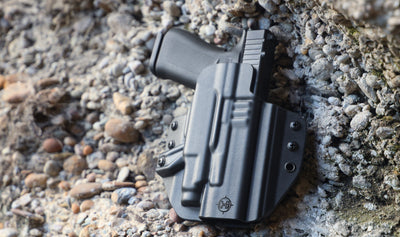
For veterans who train in OWB or operate in contexts where concealment isn't required (range work, rural carry, open-carry states), C&G Holsters' OWB Tactical Kydex Holsters, available in Quickship and fully custom configurations, deliver the duty-grade retention and precision fit that veterans trained on, built from American-made materials with CNC-machined molds for a consistent draw every time.
Key principle, regardless of position: lock it in and train it consistently. Position switching degrades the muscle memory that makes a defensive draw reliable under stress. Pick your position, commit to it, and put in the reps.
Choosing Gear That Matches Military Standards for Reliability
You were trained to trust gear that performs identically in heat, cold, humidity, and stress. Apply that same standard to your civilian holster selection.
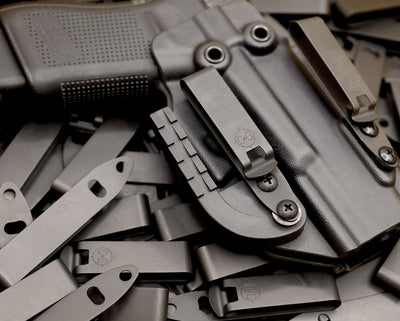
Kydex has become the dominant defensive carry material in 2026 for exactly the reasons veterans value: adjustable retention, sweat resistance, consistent draw feel regardless of temperature or humidity, and zero maintenance requirements. It's the civilian equivalent of mil-spec reliability.
Avoid leather holsters for primary defensive carry. They collapse when the firearm is drawn, requiring two hands to re-holster. They absorb moisture. They change retention characteristics over time. None of that meets the reliability standard you were trained to expect.
Precision fit matters. A holster built to your exact firearm model eliminates slop in retention and ensures the draw stroke is identical every repetition. That's the same principle behind standardized military weapons platforms: consistency breeds reliability under pressure.
Look for holsters with audible retention clicks, adjustable cant, and a design that covers the trigger guard completely. These are non-negotiable safety features that align with military safe-handling standards.
Carry Smart: The Veteran's Off-Duty Standard
Your military training is a force multiplier, not a complete civilian carry curriculum. Build on it deliberately.
Think of it as a three-layer model. First: the military foundation you already own (weapons handling, discipline, situational awareness). Second: the civilian legal and tactical skills you must acquire (state-specific use-of-force law, de-escalation, concealment management). Third: gear that performs to the standard you were trained to expect.
The legislative landscape is evolving. H.R. 8332 is in committee as of August 2026, but current law requires state compliance. Stay informed and carry legally.
Audit your current carry setup against the military reliability standard. If your holster doesn't meet it, upgrade to one that does. The mission off-duty is to protect what you hold close: family, community, self. Bring the same discipline and accountability you carried in service.
Sources
- VA Claims Insider — How Many Veterans Are There? 2026 Veteran Statistics
- Springer Nature / Injury Epidemiology — Household Firearm Access Among U.S. Military Veterans
- Everytown Research — The Transition to Civilian Life
- The Defense Post — US Bill Seeks Concealed Carry Rights for Special Ops Veterans (H.R. 8332)
- OAF Nation — Senate Bill Eyes Concealed-Carry for Vets
- MyBaseGuide — Special Operations Veterans Could Get Nationwide Concealed Carry
- Military Concealed Carry — Veteran Concealed Carry Benefits 2025
- Veterans Service Commission of Summit County, Ohio — CCW License at No Cost Through SB81
- The Global Statistics — United States Veterans Statistics 2025
- Ferrari Firearms — IWB vs OWB Holsters





Leave a comment