


'He Does Not Bear the Sword in Vain': Understanding Romans 13:4
"For he is God's servant for your good. But if you do wrong, be afraid, for he does not bear the sword in vain. For he is the servant of God, an avenger who carries out God's wrath on the wrongdoer." Romans 13:4, ESV
The meaning is direct: the one who bears arms in a lawful, protective role is acting as a servant of God. Armed authority exercised for the defense of the innocent is not a contradiction of faith. It is a fulfillment of it. Gun Owners of America has published formal theological analysis citing this verse to affirm that armed citizens and civil authorities alike act as "God's minister" against evil.
This verse has quietly become the founding charter for a growing segment of the U.S. firearms industry. Companies built on the conviction that protection is a moral calling are not a niche curiosity. They represent a principled, theologically grounded movement reshaping how this industry operates, who it serves, and what standards it holds.
The Rise of 'Faith, Family, and Firearms' as a Brand Identity
Several of the most respected names in the firearms industry were built on explicitly Christian foundations. Daniel Defense, founded by evangelical Christian Marty Daniel, operates under the tagline "Honor God. Defend Freedom." Faith, family, and firearms are not afterthoughts in their marketing. They are the company's founding pillars.
FosTecH, a Southern Indiana firearms accessories manufacturer, openly identifies as "a family-owned Christian company rooted in faith, family, and freedom." They state plainly that these values shape product design and integrity, from raw materials to finished product.
CrossBreed Holsters, one of the most recognized Christian-owned holster companies in the industry, incorporates cross imagery directly into its branding — proof that faith-based identity extends well beyond firearms themselves and into the everyday carry gear segment. Trijicon's story goes back even further. Founder Glyn Bindon began inscribing abbreviated Bible verse codes such as "JN8:12" and "2COR4:6" on rifle scopes in 1981, viewing his optics as tools that brought "light to darkness" in alignment with Scripture.
The customer base for these brands is substantial and deeply rooted. White evangelical Protestants own guns at a rate of 41%, the highest of any religious group in America, according to Pew Research Center data. PRRI reports that 54% of white evangelical Protestants have guns in their homes, and 57% of those gun owners say most or all of their social network also owns firearms.
That last statistic matters. Community reinforcement drives brand loyalty. When your friends, your church, and your family share the same values, you gravitate toward companies that reflect them. Faith-aligned brands benefit from a loyalty loop that purely secular competitors cannot replicate.
The Protector Archetype: A Theological Case for Armed Service
Romans 13:4 does not stand alone in Scripture. The through-line stretches back to Nehemiah's armed builders, who held a tool in one hand and a weapon in the other as they rebuilt Jerusalem's walls (Nehemiah 4:17-18). The Bible consistently frames armed defense of the innocent as a moral responsibility, not a moral failure.
Multiple major Christian theological resources affirm this position. GotQuestions.org states clearly that self-defense, law enforcement duty, and military service are legitimate, God-honoring reasons to own and carry firearms. The law enforcement officer, the military veteran, the concealed carrier standing between a threat and the people behind them: these individuals are the living embodiment of Romans 13:4 in daily life.
Academic research supports this convergence of faith and responsible carry. A 2025 University of Washington master's thesis found that Evangelical Christians had greater odds than non-Evangelicals of being open to church-based firearm safety programs that incorporate Scripture. Faith and responsible carry are converging, not competing.
And 77% of white evangelical gun owners say owning a gun makes them feel safer. For this audience, safety and faith are not in tension. They are unified under a sense of calling and stewardship.
How Christian Business Values Translate Into Product Standards
When a company's identity is rooted in servant leadership, integrity, and accountability before God, those values are not marketing language. They are operational standards. They show up in manufacturing tolerances, quality control processes, and the way a company treats its customers after the sale.
Trijicon's experience illustrates this well. In 2010, public controversy erupted over Bible verse codes inscribed on military-contract rifle scopes. The company ceased placing verse references on military-contract products, but never abandoned its founding Christian identity. That response was principled navigation of public scrutiny: adapt where duty requires it, but never compromise who you are.
Faith-based values connect naturally to American-made manufacturing. Integrity in sourcing, craftsmanship, and accountability to the customer are expressions of the same servant ethic described in Romans 13:4. When you believe your work answers to a higher standard, you build accordingly.
The market for this kind of commitment is serious and growing. According to Fortune Business Insights, the global guns and accessories market was valued at $7.39 billion in 2025 and is projected to reach $11.88 billion by 2034. Faith-aligned brands are not operating on the margins. They are competing and winning.
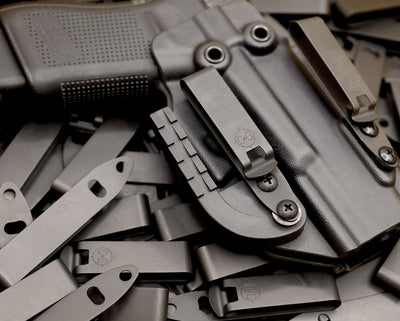
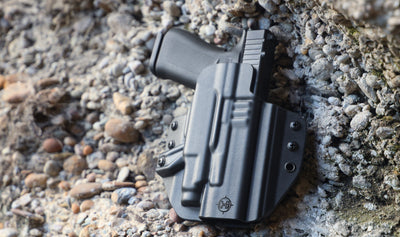
C&G Holsters' OWB Tactical Kydex Holster reflects this servant-craftsman ethic: CNC-machined from custom aluminum molds, 100% American-made with locally sourced materials, and designed by a retired Law Enforcement Officer and Master Firearms Instructor. It is the kind of product built to perform when a protector's life depends on it.
Christian business ethics also shape who companies sell to, how they train customers, and how they engage their communities. These ethical dimensions build lasting trust with law enforcement, military, and concealed carry customers who expect more than a transaction. They expect a relationship grounded in shared purpose.
Serving the Servant: Why Faith-Centered Brands Earn Lasting Loyalty
Faith-aligned customers actively seek out Christian-owned brands because shared values create a sense of shared mission. The purchase becomes an act of community, not just commerce. You are supporting a company that sees the world the way you do and builds products for the same reasons you carry them.
This loyalty dynamic extends across industries. Patriot Mobile received the 2025 "Business 2A Champion Award" from Women for Gun Rights, demonstrating that Christian identity and Second Amendment advocacy create cross-industry loyalty ecosystems that reinforce one another.
Responsible stewardship is a shared value that reaches beyond any single denomination. 84% of Americans affiliated with a religious community support background checks for all gun sales. Christian brands that lead on safety and education earn trust from the broadest possible audience.
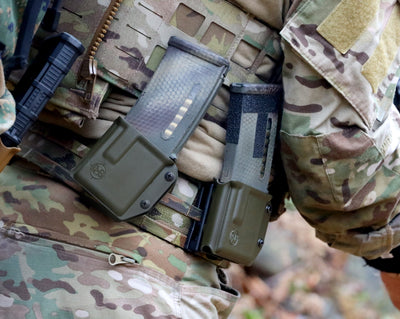
Church-based firearm safety programs represent an emerging frontier where Christian firearms brands can serve as partners in responsible carry education: not just vendors, but community leaders. C&G Holsters embodies this approach, staffed by U.S. Military Veterans, LEOs, and competitive shooters, with a Firearms Instructor Program and direct support for military units. That is servant leadership in practice. That is the Romans 13:4 ethos expressed through business operations and community investment.
Bearing the Sword With Purpose: A Standard Worth Holding
Romans 13:4 is not a fringe proof-text. It is the theological backbone of a principled, growing movement of Christian-centered businesses raising the standard for integrity, craftsmanship, and community across the firearms industry.
If you are a law enforcement officer, a veteran, a concealed carrier, or a firearms instructor, the verse speaks directly to you. Your vocation is not in conflict with your faith. It is an expression of it. You are the servant described in Scripture, standing in the gap between the innocent and those who would do harm.
The global firearms market is projected to reach $76.6 billion by 2035, according to Global Market Insights. The companies that will lead are those built on something deeper than profit: on mission, on values, and on the conviction that bearing arms responsibly is a calling. Choose gear, brands, and communities that reflect the standard you hold. Because the standard you carry in your equipment should match the standard you carry in your heart.
Sources
- Gun Owners of America – The Bible and Gun Control
- Daniel Defense – Company Values
- FosTecH – About
- Christianity Today – Should Christians Own Guns for Self-Defense?
- PRRI – The Gun Ownership Bubble
- GotQuestions.org – Should a Christian Own Weapons?
- University of Washington – Associations Between Openness to Church-Based Firearm Safety Interventions and Evangelical Identity (2025)
- TheGunZone – When Did Trijicon Stop Posting Bible Verses?
- Fortune Business Insights – Guns and Accessories Market Size & Report 2034
- The Truth About Guns – 8 Pro-2A Companies Outside the Firearms Industry
- Center for American Progress – Religious Organizations Are Integral to the Fight Against Gun Violence
- Global Market Insights – Global Firearms Market Size & Forecast 2025–2035





Leave a comment