


Why Your Micro-Compact Demands a Purpose-Built Holster
The SIG Sauer P365, GLOCK 43X, Springfield Armory Hellcat PRO, and FN Reflex all fall into the compact, concealed-carry category, but they have different dimensions, frame profiles, slide configurations, and accessory options. A holster designed for one model should not automatically be assumed to fit another.
Micro-compact pistols have become a popular choice for everyday concealed carry because they offer a balance of size, capacity, and shootability. But choosing a smaller firearm is only part of the equation. The holster also needs to provide a consistent fit, secure retention, and the right clearance for your firearm's sights, optic, and any mounted accessories.
The concealed-carry landscape continues to evolve, too. According to the Crime Prevention Research Center's May 2026 survey, an estimated 29.8% of Americans reported carrying a concealed handgun, up from 24.3% in December 2024. As more people explore concealed carry, understanding firearm fit and holster selection is an important part of making an informed decision.
This guide compares all four pistols, explains how their dimensions and configurations affect holster selection, and covers carry positions, materials, optics, and weapon-light compatibility.
Know Your Gun: Dimensions That Drive Holster Fit
Holster fit starts with the firearm itself. Barrel length, grip height, slide width, and the location of the trigger guard all affect how a pistol sits in a holster and how comfortably it can be carried.
Here is a comparison of the four standard pistol models featured in this guide:
- SIG Sauer P365: 3.1-inch barrel, approximately 17.8 ounces, approximately 1.06-inch width, and a standard 10-round magazine.
- GLOCK 43X: 3.41-inch barrel, approximately 18.7 ounces with an empty magazine, 1.10-inch width, and a standard 10-round magazine.
- Springfield Armory Hellcat PRO: 3.7-inch barrel, approximately 18.3 ounces, approximately 1-inch width, and a standard 15-round magazine. Extended-capacity magazines are available.
- FN Reflex: 3.3-inch barrel, approximately 18.4 ounces, approximately 1-inch width, and standard 11- or 15-round magazine options, depending on the configuration.
Specifications are approximate and may vary by model, generation, and configuration. Confirm the manufacturer's specifications for your exact firearm before purchasing a holster.
The key takeaway is that barrel length alone doesn't determine how well a pistol conceals. Grip height and grip shape are particularly important because the grip is often the part most likely to print through a shirt. Body type, clothing, holster ride height, cant, and belt setup also influence concealment.
The GLOCK 43X has a longer grip than the standard GLOCK 43. That extra grip length provides more room for the shooter's hand, but it can also make concealment more challenging for some people. A properly positioned concealment wing or claw may help tuck the grip closer to the body when using an appropriate inside-the-waistband (IWB) holster.
The Hellcat PRO has a longer slide and a higher-capacity magazine than the original Hellcat. It's still a relatively slim pistol, but its dimensions differ enough that you should select a holster specifically designed for the PRO rather than assuming a standard Hellcat holster will fit.
The FN Reflex is its own firearm platform, separate from the Springfield Hellcat family. Although the two pistols occupy a similar category, their dimensions, trigger-guard shapes, and other fitment details differ. A holster molded for the Hellcat should not be assumed to fit the FN Reflex.
The same principle applies to the P365 family. The original P365, P365X, P365XL, and other variants don't all share the same dimensions. Always confirm the exact model when selecting a holster.
Optics-Ready Variants: What Changes for Your Holster?
Red-dot optics have become increasingly common on concealed-carry pistols. However, an optics-ready slide and a holster's optic clearance are two different things.
The GLOCK 43X MOS is designed to accommodate compatible optics. The standard GLOCK 43X and the MOS version differ in their configurations, so it's important to check the holster manufacturer's fit notes rather than assuming every 43X holster accommodates every optic setup.
The SIG P365 also comes in different configurations, and optic compatibility depends on the specific slide and optic combination. Verify the footprint and mounting requirements for your particular firearm and red dot.
Springfield offers optic-ready versions of the Hellcat PRO, including configurations with a factory-milled slide. The FN Reflex is also available in an optics-ready MRD configuration. These models should be checked individually for the optic installed and the holster's available clearance.
For a holster with an optic cut, confirm that the mounted optic clears the holster body throughout the draw and that the holster does not interfere with safe reholstering. The optic housing, mounting hardware, and any other accessories can affect the fit.
An optic-ready firearm doesn't automatically require a unique holster for every red dot. Some holsters are designed with clearance for a range of optics, while others have more specific limitations. Check the product specifications before ordering.
Carry Position Breakdown by Gun Model
There isn't one carry position that works best for everyone. Your body shape, clothing, firearm dimensions, holster design, and comfort all play a part. Here is how the four pistols can fit into common carry setups.
Appendix IWB (AIWB)
Appendix carry places the holster near the front of the waistband. All four pistols may be suitable for appendix carry when paired with a properly fitted holster, but comfort and concealment will vary.
The P365's compact dimensions can make it an appealing option for people who prioritize a smaller overall footprint. The GLOCK 43X and Hellcat PRO have different grip and slide dimensions, which may affect how they sit against the body. The FN Reflex offers another slim-profile option, but the right setup still depends on the individual.
A concealment wing or claw can help rotate the grip inward, while a compatible wedge may improve comfort and reduce printing for some users. Neither accessory is essential for everyone, and placement should be evaluated with the specific holster and firearm.
Strong-Side IWB (3–4 o'clock)
Strong-side IWB carry positions the holster along the hip, typically behind or near the hip bone. This position can work well with all four pistols.
Some carriers find that the grip is easier to conceal at the strong side than at the appendix position. Others prefer appendix carry because it better suits their body type or clothing. Holster cant, ride height, and belt stiffness can all affect the result.
OWB (Outside the Waistband)
OWB holsters sit outside the waistband and are commonly used for range sessions, training, and open carry where lawful. They can also be concealed under suitable outerwear with an appropriately designed setup.
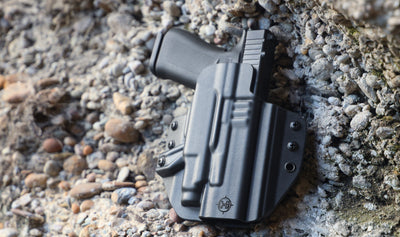
All four pistols can be used with an OWB holster specifically molded for the selected firearm. Confirm that the holster provides the intended retention and that the mounting hardware and belt are compatible with the setup.
Pocket Carry
Pocket carry is highly dependent on the dimensions of the firearm, the pocket itself, and the pocket holster. The P365 and FN Reflex may be considered for suitable pockets, but their suitability varies with the particular configuration and clothing. The GLOCK 43X and Hellcat PRO are generally less convenient for pocket carry because of their grip and overall dimensions.
A dedicated pocket holster should cover the trigger guard, keep the pistol properly oriented, and prevent other items from entering the trigger area. Never carry a handgun loose in a pocket with keys, coins, or other objects.
Holster Wedges and Concealment Accessories
A wedge can change the angle at which an IWB holster sits against the body. Depending on the wearer and holster, it may improve comfort, reduce muzzle pressure, or help bring the grip closer to the body.
A concealment wing or claw can serve a similar concealment goal by using belt pressure to rotate the grip inward. The results depend on the holster, belt, body shape, and clothing, so these accessories are best evaluated as part of the complete carry setup rather than as universal requirements.
Kydex vs. Other Materials: Why Precision Molding Matters for Micro-Compacts
Kydex is a popular holster material because it is rigid, durable, moisture-resistant, and capable of holding a consistent shape. When a holster is properly designed and molded for a particular firearm, it can provide repeatable retention and a consistent draw.
That consistency matters with smaller pistols, where even relatively small differences in the frame, trigger guard, or accessory configuration can affect fit.
Nylon holsters: Soft nylon holsters may be lightweight and inexpensive, but their flexibility can make it difficult to maintain a consistently open holster mouth after the firearm is drawn. For that reason, a properly fitted rigid holster is often preferred for everyday carry, especially when reholstering.
Leather holsters: Leather can offer comfort and a traditional appearance. However, it may stretch, soften, or change shape with use and moisture. Holster condition and trigger-guard coverage should be evaluated regularly.
Hybrid holsters: These combine materials, commonly a rigid shell with a softer backing. They can offer a different balance of comfort and structure, but overall thickness and fit depend on the design.
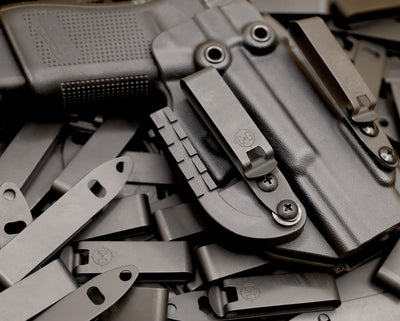
For a precision-molded Kydex holster, the firearm-specific mold is a key part of the process. C&G Holsters uses 3D firearm scanning, CAD modeling, and precision manufacturing in its GEN6 designs to produce consistent fit. The design also incorporates features intended to support retention, optic clearance, and practical everyday use.
Explore the C&G COVERT/ALPHA Kydex Holster collection for available configurations. Before ordering, confirm that your exact firearm model is listed and that the selected holster accommodates your optic and any other accessories.
Light-Bearing Carry and Belt Compatibility
A weapon light can add capability to a carry setup, but it also changes the fit requirements of the holster. A light-bearing holster is generally molded around the specific firearm-and-light combination, rather than the firearm alone.
The Streamlight TLR-7 Sub is one example of a compact weapon light used on compatible pistols. However, compatibility varies by firearm model, rail design, and light version. Do not assume that a light fitting one pistol in this guide means it will fit the other three.
The same applies to the TLR-7 X Sub, TLR-7 HL-X Sub, and other light models. Confirm the exact light and firearm combination before purchasing a holster. The holster must be specifically designed for that setup, and the light must be installed as intended for the holster to fit correctly.
Belt compatibility matters, too. A sturdy, properly sized belt helps support the weight of the firearm and holster while keeping the setup stable. Belt width must match the holster's clips or loops. A belt that bends excessively or doesn't hold the holster securely can affect comfort, concealment, and consistency.
Retention adjustment basics: Follow the holster manufacturer's instructions when checking or adjusting retention. Use an unloaded firearm, verify that the firearm is clear, and keep ammunition away from the work area. Make adjustments in small increments and check that the holster retains the firearm securely without interfering with a smooth, controlled draw. Never rely on an audible click alone to establish that a firearm is safely retained.
Training and familiarity: Before carrying a new firearm and holster combination, become familiar with its fit and operation in a safe environment. Practice should follow appropriate firearm-safety procedures and, where possible, instruction from a qualified firearms instructor. Choose a carry position based on fit, comfort, accessibility, and your ability to handle the setup safely.
Choose the Right Holster for Your Micro-Compact and Carry with Confidence
The P365, GLOCK 43X, Hellcat PRO, and FN Reflex all offer compact options for people considering everyday concealed carry, but they aren't interchangeable.
The P365 has a compact footprint that may appeal to those prioritizing a smaller pistol. The GLOCK 43X offers a longer grip than the standard GLOCK 43. The Hellcat PRO provides a longer slide and higher standard magazine capacity than the original Hellcat. The FN Reflex is a separate micro-compact platform with its own dimensions and optic-ready configurations.
The right holster depends on the exact firearm, the way you intend to carry it, and any accessories mounted to it. Confirm the model name, slide configuration, optic, weapon light, and holster compatibility before placing an order.
Our GEN6 designs use precision molding and practical features developed around real-world use. When choosing a holster, look for the same attention to fit and function, and make sure the product is designed for your particular setup.
Find a holster for your specific firearm:





Leave a comment