


Your Holster Was Designed Once. Ours Was Designed Six Times.
A first-generation mold is an engineer's best guess. A sixth-generation mold is a proven answer. Which one is riding on your hip?
The stakes are not abstract. The average human reacts to a visual threat in 0.25 seconds. An effective draw takes 1.5 to 2 seconds. Every fraction of that window depends on holster engineering, not just training reps.
Most buyers evaluate holsters on price and brand name. Almost nobody asks the question that actually matters: how many design iterations stand behind the mold that shapes their holster? This article closes that gap.
C&G Holsters was founded by a retired Law Enforcement Officer and Master Firearms Instructor. We are now in our sixth generation of holster designs, and our team is staffed by U.S. Military Veterans, LEOs, and competitive shooters who stake their own safety on the products we build. What follows is a map of what changes between mold generations and why Gen-1 designs cannot deliver what Gen-6 engineering produces.
The Kydex Revolution: From Cottage Industry to CNC Precision
Kydex was originally developed in 1965 by Rohm and Haas for aircraft interiors. By the 1970s, law enforcement holster makers recognized its potential: lightweight, low moisture absorption, and easy to shape under heat. It was a material built for hard use, adopted by people who needed exactly that.
The industry that grew around it started small. Hobbyist foam-press operations and leather craftsmen dominated for decades. As Ronin's Grips documents, that cottage industry has since evolved into a high-precision manufacturing sector driven by aerospace-grade thermoplastics, CAD software, and CNC automation.
The thermoforming process is straightforward in concept, unforgiving in execution. Kydex sheets are heated to between 325°F and 375°F, then pressed or vacuum-formed over a mold. As the material cools, it locks into the molded shape and becomes rigid. That single fact makes mold accuracy the most critical variable in final holster fit. Get the mold wrong, and every holster that comes off the line carries that error.
Aluminum is the preferred mold material. As Zero 28 Customs explains, its heat resistance and structural integrity allow Kydex to wrap precisely around the mold and replicate the firearm's exact contours.
This is not a niche market. The global Kydex gun holster market is valued at $416 million in 2025, growing at a 3.2% CAGR through 2033, according to Market Report Analytics. Polymer and Kydex holsters account for nearly 42% of all new product launches, per Business Research Insights. In a category this large and growing this fast, engineering precision is what separates leaders from everyone else.
What a First-Generation Mold Actually Is — And Why It Falls Short
A first-generation mold is an engineer's initial interpretation of a firearm's geometry, typically based on measurements, early 3D scans, or reference samples. It is a starting point, not a finished solution.
Gen-1 failure modes are well documented by anyone who has done this work long enough: loose fit around the trigger guard, inconsistent retention pressure across production runs, poor indexing, and millimeter-scale variance that compounds under physical stress. These are not cosmetic issues. They are functional failures.
Millimeter-scale variance matters because of how holsters are actually used. As described in USPTO Patent 10837735, military and law enforcement personnel must simultaneously secure handguns against inadvertent drops during high exertion, prevent unauthorized access by aggressors, and draw quickly under intense psychological pressure. Tolerances within thousandths of an inch are not a marketing claim. They are an operational requirement, and CNC-machined molds are designed to hold those tolerances.
The training side reinforces this. Police1 reports that scenario-based law enforcement training has exposed significant gaps in weapon retention skills, with officers struggling to holster or retain control when confronted by rapidly advancing threats. Holster fit precision is an upstream variable that training volume alone cannot compensate for.
Industry-wide, loose fit and retention failure lead to returns in approximately 2.4% of holster shipments, according to Market Growth Reports. That number may sound small until you consider the volume of holsters shipped annually. Iterative CNC mold refinement is specifically engineered to eliminate that failure rate.
Most buyers have no framework to evaluate holster quality beyond price and brand recognition. "CNC machined" is table stakes in 2026. The number of design generations behind a mold is the real differentiator.
The Engineering Checkpoints: What Changes Across Six Generations
Modern CNC mold development starts with meticulous 3D scans of actual firearms. Those scans are translated into CAD files, then machined into aluminum molds that capture exact curvature, slide serrations, rail dimensions, and trigger guard geometry. The process is precise. But precision on the first attempt is not the same as precision refined through six cycles of real-world validation.
Each generation addresses specific failure modes identified through testing and user feedback:
- Gen-1 establishes baseline geometry from the initial 3D scan.
- Gen-2 corrects retention pressure distribution and trigger guard fit.
- Gen-3 refines draw angle and cant geometry for speed and consistency.
- Gen-4 addresses wear patterns and long-term retention stability over thousands of draw cycles.
- Gen-5 integrates field feedback from law enforcement and competitive shooter testing under real conditions.
- Gen-6 achieves repeatable, consistent performance across every production run.
The engineering parallel is worth stating plainly. Iterative holster mold development mirrors aerospace and automotive safety system refinement. Nobody trusts an airbag deployment system to a first-draft design. A holster carried in a life-safety context deserves the same rigor.
The economics support this approach. LA NPDT explains that refining mold design early through iterative prototyping avoids expensive changes later in the production cycle, improves process stability, and prevents quality failures. Leading holster manufacturers invest over $1 million per major SKU launch in R&D for retention systems and molded fit.
Complexity multiplies with tactical configurations. Adding a weapon light or red dot sight increases the number of mold iterations required to achieve a clean, reliable draw. Optics-ready and light-bearing setups demand tighter tolerances across more surfaces, making Gen-6 engineering especially critical for these configurations.
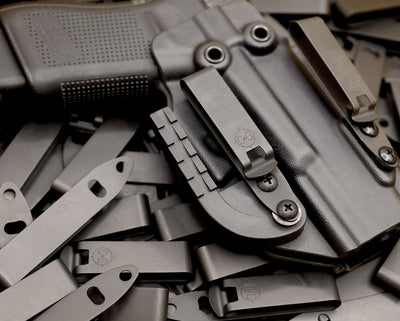
At C&G, each holster is designed from a custom mold engineered by our in-house team, then CNC machined, finished, assembled, and fit-tested to ensure a reliable draw every time. This is not outsourced iteration. It is vertically integrated engineering discipline, performed by people who carry the product they build.
GEN6 Engineering in Practice: The OWB COVERT
Six generations of mold refinement translate into a holster you can trust on the range, on duty, or every day.
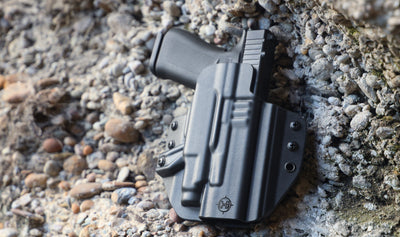
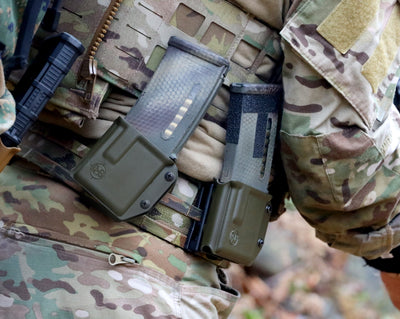
The OWB COVERT collection is our outside-the-waistband expression of GEN6 CNC engineering. Available in both Quickship (5-business-day) and fully custom Kydex configurations, including a combo option with a matched magazine holder, it covers nearly every handgun on the market.
What does Gen-6 mold precision deliver in this platform? Consistent retention pressure calibrated to the exact firearm profile. A draw angle engineered for speed and repeatability. Trigger guard indexing that meets the simultaneous demands of security, retention, and rapid access.
The OWB COVERT was built by people who have carried on duty: Veterans, LEOs, and competitive shooters who understand that a holster is not just gear. It is a system.
Why Mold Generation Depth Is the Metric Serious Buyers Should Demand
In a $416 million Kydex holster market where "CNC machined" and "made in the USA" are increasingly common claims, the number of design generations behind a mold is the differentiator that separates engineering integrity from marketing language.
The data backs this up. Brands relying on legacy first-generation or generic mold designs have seen measurable decline in consumer sentiment among educated buyers, while CNC-precision-mold brands lead in engineering integrity and market trust.
If you are serious about what rides on your hip, here is the checklist:
- Ask how many mold generations the holster has been through.
- Ask whether the mold was built from a 3D scan of the actual firearm or from reference measurements.
- Ask whether the design has been field-tested by law enforcement or military personnel.
- Ask whether the manufacturer does in-house fit testing on every unit.
These are the evaluation criteria that someone with deep manufacturing and field experience would know to ask. Most marketing will never volunteer this information. We do, because our founding ethos of Faith, Family, and Service, "For All That You Hold Close," means our commitment to six generations of mold refinement is an expression of that mission.
The personal defense application segment is the fastest-growing in the global holster market at 4.8% CAGR, according to DataIntelo. More people are carrying than ever before. Most are making holster decisions without the engineering framework to evaluate what they are buying. That needs to change.
The Draw You Can Count On Starts With the Mold
Your holster was designed once. Ours was designed six times. That difference is not a selling point. It is an engineering reality with life-safety consequences.
Gen-1 molds are first drafts. Iterative CNC engineering across six generations eliminates the failure modes that training cannot fix. The buyers who understand this are the ones who carry with confidence.
C&G Holsters was built by a retired LEO and Master Firearms Instructor with decades of real-world experience, supported by a team of U.S. Military Veterans and competitive shooters, and committed to equipping military units with limited resources. We do not design holsters once and ship them. We engineer them, test them, refine them, and then put our own names behind them.
Explore our full line of CNC-machined, GEN6 holsters. Quickship or fully custom. Carry something that was engineered, not just manufactured.
Sources
- Holster Fundamentals: Speed vs. Retention and Security — Inside Safariland
- Top 10 Kydex Holster Brands Based on 2025 Data — Ronin's Grips
- The Evolution of Kydex Holsters: Embracing CNC Molding and Vacuum Techniques — Zero 28 Customs
- Kydex Gun Holster Market 2025–2033 Analysis — Market Report Analytics
- Holster Market Size & Trends Outlook 2035 — Business Research Insights
- Auto Retention Holster — USPTO Patent 10837735
- CNC Precision Kydex Holster Molds — Talon Retention
- Unholstering a Firearm: What Happens Next? — Police1
- Holster Market Size, Share, Trends & Growth Report 2035 — Market Growth Reports
- The Economics of Tooling: Mold Design, Material Choice, and Tolerances — LA NPDT
- C&G Holsters — Official Homepage
- Global Holster Market Research Report 2034 — DataIntelo





Leave a comment