


The Draw That Fails When It Matters Most
Stress cuts draw speed by 30–50% due to fine motor skill degradation. The only counter to that degradation is muscle memory. And muscle memory requires the gun to be in the exact same place, every single time you reach for it.
Approximately 90% of defensive shootings happen between 9 and 15 feet, per USCCA. These encounters unfold in seconds. The draw must already be grooved before the fight starts, not figured out during it.
Consistent holster placement is not a comfort preference. It is a measurable, trainable survival variable. And most carriers are unknowingly destroying it every time they strap on their gear.
Why Your Brain Can't Save You If Your Gear Moves
When a threat appears, your heart rate can spike above 115 beats per minute within seconds. At that threshold, fine motor skills start to fall apart. Your body stops thinking and starts defaulting to gross motor patterns and whatever you've drilled through repetition. A study published through the National Institutes of Health confirmed that officers with more repetitive, consistent training made fewer errors, shot more accurately, and had faster motor onsets under stress.
Stress doesn't just slow the draw. It reroutes the brain to rely exclusively on what's been ingrained. If your holster sits in a different position than it did during training, the motor program fails. Your hand searches. Your grip is wrong. Fractions of a second vanish.
That 30–50% draw time increase under stress is the physiological cost of being human. You cannot override it with willpower. The only way to offset it is to ensure every variable you can control stays fixed, and holster placement is the variable most carriers overlook.
The stakes go beyond speed. According to FBI LEOKA data, approximately 8–10% of officer fatalities involve the officer's own weapon. Retention and draw consistency are not optional considerations. They are life-and-death fundamentals.
The Position-Switching Trap That Resets Your Training
There's a problem we call the "gear carousel." Carriers rotate between multiple holsters, carry positions, or setups thinking they're optimizing. In reality, they're resetting their muscle memory with every switch.
A holster sitting at a different angle or ride height every day forces the shooter to relearn the draw every day. As True North Concepts points out, inconsistent ride height or cant is one of the most common and damaging mistakes in defensive carry. Changing carry positions too often as one of the most dangerous concealed carry mistakes, precisely because it silently destroys draw consistency without the carrier realizing it.
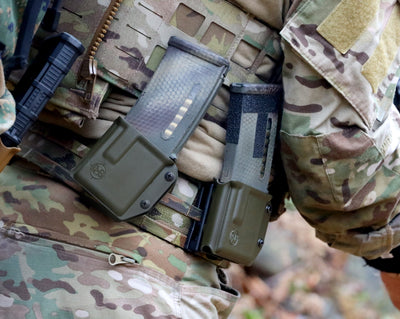
For our LEO and military readers (and our staff includes U.S. Military Veterans, LEOs, and competitive shooters who have lived this problem): switching between a duty rig and an off-duty carry setup creates a dangerous inconsistency that must be deliberately managed. The draw from your duty belt and the draw from your concealment holster are two different motor programs unless you train both with discipline.
Shifting attention from the target to the holster during a draw disrupts focus and slows reaction time. Defeating retention must be an unconscious process. The fix is deliberate: pick a position, commit to it, and train it until the hand finds the gun without conscious thought.
The Hardware Variables That Determine Whether Technique Works
Holster equipment shapes the draw stroke as much as technique does. Cant angle, ride height, and platform stability directly determine whether your technique can be executed consistently from rep to rep, day to day.
A holster that flexes, sags, or rotates on the belt forces the shooter to grip-search every rep. The hand never lands in the same place. The grip is never the same. The draw never gets faster. That is a structural problem, not a training problem.
Kydex holsters maintain their shape over time and provide consistent retention. Leather holsters can soften and collapse when the firearm is drawn, creating a structural liability for repeatable draw strokes. If the holster mouth closes after every draw, you're fighting your gear instead of training your technique.
The belt is a co-equal component in this system. When the belt is weak, the holster never stays in the same place because the gun angle changes slightly every time the carrier moves. New carriers often blame the holster when the real issue is the belt underneath it.
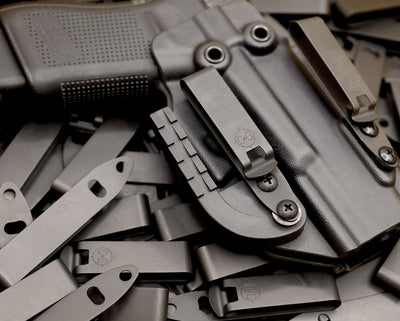
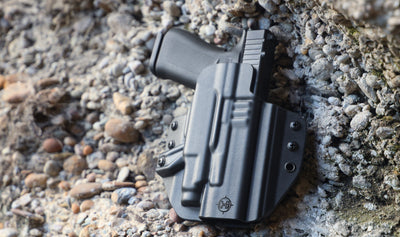
This is why C&G Holsters, founded by a retired Law Enforcement Officer and Master Firearms Instructor, engineered the TRINITY Belt Mounted Kydex Holster System as a holster-and-belt platform designed to function as a single stability unit. Each holster is CNC-machined from custom aluminum molds, producing a consistent, repeatable draw every single rep. It's available in both Quickship and fully custom configurations.
Retention type matters for the mission, too. Passive retention friction-fit systems average 0.2–0.5 seconds faster than active retention systems with thumb breaks. For duty carry, active retention may be required. For concealed carry, passive retention often makes more sense. Match the retention level to your mission, then train it until it's invisible.
How to Lock In Placement Through Deliberate Practice
It takes approximately 200 repetitions to sear a fast presentation into muscle memory, according to Gun Digest. Quantity of correct reps is non-negotiable. There is no shortcut.
Dry fire training with a fixed holster position is the most cost-effective path to a consistent draw stroke. With ammunition costs still elevated, dry fire is the primary tool for locking in placement. Every rep should be performed from the exact holster position you carry in daily life.
Distributed practice, meaning shorter and more frequent sessions throughout the year, improves draw stroke retention more than infrequent marathon sessions. Fifteen minutes daily beats two hours monthly. Consistency in training mirrors the consistency you're building in the draw itself.
Data-driven training accelerates progress. According to the Axle Targets Shot Timer Mastery Guide, shooters using timed practice see a 20% increase in proficiency within the first 60 days. Use a shot timer. Measure every rep. What you don't measure, you can't improve.
The professional benchmark is a sub-1.5-second draw to a first hit at 7 yards from a duty rig. Elite operators achieve sub-1.0-second times. Those numbers only happen when every step of the draw is grooved through deliberate repetition with zero variation in holster placement.
Appendix carry (AIWB) can shave 0.3–0.7 seconds off the draw compared to other positions. But that advantage only materializes if the position is trained consistently and the holster holds its place throughout the day. A faster position with inconsistent placement is slower than a committed position with locked-in reps.
Set the Standard, Then Never Compromise It
Consistent holster placement is not a preference. It is a foundational defensive skill with measurable performance outcomes. One position. One holster. One system. Trained until the draw is unconscious.
Five hundred reps mean nothing if the holster moved between sessions. Gear discipline and training discipline must match. The standard is set in training, held in gear, and proven when it counts.
Audit your current setup. Does your carry position match your training position? Does your holster hold its place under real-world movement? If the answer to either question is no, you have work to do. Fix it now, not during the encounter you're training for.





Leave a comment