


Why Your Holster Choice Is a Life-or-Death Decision for Church Security
In 2025, three churches were struck by active shooters. The one with trained, armed volunteers lost zero congregation members. The other two lost 42 people combined. That contrast is not a coincidence. It is the result of preparation, training, and purpose-built gear.
According to Christian Warrior Training's analysis of the FBI 2025 Active Shooter Report, 3 of 34 active shooter incidents occurred at churches. That is just 9% of total events, yet those three attacks produced 43 of the nation's 166 total casualties: 26% of all deaths. Churches are disproportionately lethal targets.
The threat is accelerating. Church attacks surged nearly 900% from 2018 to 2023, and gun-related incidents more than doubled from 12 to 28 between 2023 and 2024, according to the Family Research Council via Daily Citizen. A 2023 Lifeway Research survey found that 54% of Protestant churches recruiting security volunteers arm them, making armed congregant volunteers the dominant model over professional guards. Yet roughly 50% of those volunteers are civilians with limited formal tactical training. Gear selection is not a preference. It is a component of a life-safety system.
The Theological Foundation: Called to Protect
Romans 13:4 frames the armed protector as "God's servant for your good" and "an avenger who carries out God's wrath on the wrongdoer." For church security volunteers, this is not metaphor. It is a direct theological mandate for the sheepdog role within a congregation.
C&G Holsters is a Christian-owned company, founded by a retired Law Enforcement Officer and Master Firearms Instructor. We engrave Romans 13:4 on every holster we produce. That is not a marketing decision. It is a statement of who we are and what we believe the protector's role demands.
The sheepdog role within a congregation is a calling, not merely a volunteer slot on a signup sheet. On June 22, 2025, volunteer security members at CrossPointe Community Church in Wayne, Michigan proved that calling in action. An attacker carrying an AR-15 and a handgun attempted to enter a Sunday service with 150+ worshippers inside. Trained, armed volunteers stopped him before he reached the congregation. Zero parishioners died, as reported by the Crime Prevention Research Center. Duty and faith are not in conflict. They are unified in the church security volunteer mission.
Know Your Environment: Where Church Violence Actually Happens
Most people picture an active shooter bursting through sanctuary doors mid-sermon. The data tells a different story. According to Christian Warrior Training's 2025 tracking data, over 70% of violent incidents at churches occurred outside the building, in parking lots and on church grounds, not inside the sanctuary during services.
That single statistic reshapes every gear decision you make. Your holster must perform equally well while you are seated in a pew for 90 minutes and while you are patrolling a parking lot in dress clothes. These are two fundamentally different physical demands, and your gear must handle both.
The Family Research Council tracked 415 hostile incidents targeting U.S. churches in 2024 alone, the second-highest annual total ever recorded, spanning 383 churches across 43 states. In 2025, 23 of 34 active shooters (68%) showed predatory, pre-planned behavior. They scouted. They prepared. That pattern underscores the value of threat recognition during pre-service parking lot patrol, where an alert volunteer can identify warning signs before an attacker ever reaches the door.
Meanwhile, Omnilert reports that 17% of Protestant churches still have zero security measures: no armed personnel, no radio, no active shooter plan. In most congregations, volunteer teams are the last line of defense. Gear must be selected for a dual-environment role: formal indoor concealment and active outdoor patrol posture.
Carry Position: Matching Draw to the Church Environment
Appendix carry (AIWB) offers the highest concealment ceiling of any carry position. When you bend, squat, or sit in a pew, an AIWB holster stays tucked against your body where strong-side options can print or shift. For volunteers who sit through full services, AIWB is the top choice.
Strong-side IWB at 3:30 to 4 o'clock is the best balance of concealment and comfort for extended multi-hour wear in formal attire. Strong-side carry distributes weight naturally along the beltline, making it the preferred alternative for volunteers who find AIWB uncomfortable during seated services.
Here is a critical training gap most teams overlook: the majority of church security volunteers have never practiced drawing from a seated pew position. Dry-fire rehearsal from a seated posture, in the clothes you will actually wear, must happen before any live assignment.
Parking lot patrol changes the equation. Strong-side carry allows a more natural draw during standing movement. AIWB requires deliberate practice to access efficiently while walking. OWB carry under a sport coat or suit jacket is viable for patrol-heavy roles, but it demands a well-fitted cover garment. Any printing defeats the concealment mission.
One final rule: carry position must be chosen once and trained consistently. Switching positions between indoor and outdoor phases of a service creates dangerous muscle-memory confusion. Pick one position, train it under every scenario you will encounter, and commit to it.
Retention Level: Choosing Level I, II, or III for Your Role
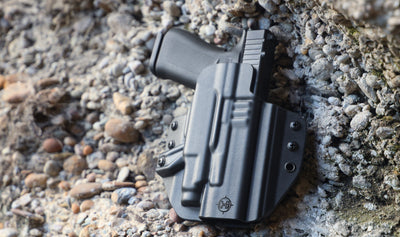
Level I passive retention (friction-fit Kydex, IWB or OWB) is the appropriate standard for concealed church security volunteers. It allows a clean, consistent draw without secondary retention devices that slow response time under stress. When fractions of a second determine outcomes, simplicity wins.
Level II retention is recommended if the volunteer carries openly, patrols high-traffic exterior areas, or may engage in physical confrontations where weapon retention becomes a direct concern. The added retention device (typically a thumb release or hood) provides security against a grab attempt, which matters more in an exposed patrol role than in a concealed one.
Level III retention is generally inappropriate for civilian concealed roles. The added draw complexity under stress, often requiring three distinct release motions, outweighs the retention benefit in a plainclothes church environment. Retention level is a function of role, not a status symbol.
CCW Safe training data confirms that some holsters used by church security volunteers do not lend themselves to concealed carry, and others are outright dangerous during reholstering. Passive Kydex with a defined retention click eliminates both risks. You hear and feel the firearm lock into place. Every time.
Concealed volunteers should prioritize draw speed. Patrol volunteers should prioritize weapon security. Match your retention level to your specific role, attire, and likely threat scenario.
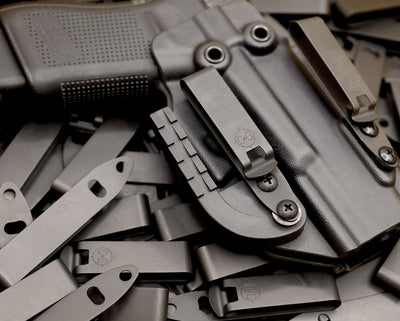
Our COVERT and ALPHA Kydex holster lines, available in both IWB and OWB configurations with Quickship (5-day) and fully custom options, are CNC-machined from custom aluminum molds to deliver consistent, repeatable draw with Level I passive retention built for the concealed civilian role. The COVERT IWB is particularly well-suited for AIWB and strong-side church carry in formal attire, with low-profile clips and optional claw/wing attachments for maximum concealment.
Concealment in Formal Church Attire: The Plainclothes Challenge
Church security volunteers must look like congregants, not operators. Printing, visible clips, or tactical gear immediately compromise the concealment mission and may actually escalate a threat by identifying you as the first target.
Dress shirts and slacks require a holster with a low-profile clip and a wing or claw attachment. The wing presses against the inside of your belt, rotating the grip inward and reducing printing against thinner dress fabric. Without it, even a compact firearm can telegraph its outline through a tucked shirt.
Sport coats and suit jackets are the most effective cover garments for OWB or strong-side IWB carry. The volunteer must practice drawing from a buttoned jacket under time pressure. Fumbling with a button under stress is a training problem, not a gear problem, and it must be solved before the first live assignment.
Tucked-shirt carry requires a dedicated tuckable IWB holster with clips that disappear under a tucked dress shirt. Not all Kydex holsters support this configuration, so verify compatibility before purchasing.
Belt selection is non-negotiable. A rigid gun belt, 1.5-inch minimum width, is required to support a holstered firearm through a 2 to 3 hour service without shift or sag. A standard dress belt will fail under the weight, shifting and sagging until it compromises your draw.
Multi-hour wear in formal attire is a unique physical demand. Conduct a full dress rehearsal at home before your first live assignment. Wear the exact outfit, holster, belt, and firearm for the full duration of a typical service. Identify hotspots, printing issues, and draw interference before they matter.
Medical Integration: The IFAK Is Not Optional
Church security experts now argue that if a safety team carries only one category of equipment beyond communication, it should be medical gear. Trace Armory Group and other industry voices are clear: a compact IFAK with a tourniquet, hemostatic gauze, and chest seal belongs on every volunteer's belt.
The skills gap is real. In a randomized trial of 465 laypeople cited by MED-TAC International, only 16% of untrained individuals applied a tourniquet correctly. After a one-hour ACS Bleeding Control Basic course, that number jumped to 88%. Retention dropped to 54.5% at 3 to 9 months without refresher training. Tourniquet skills require regular practice, not a one-time certification.
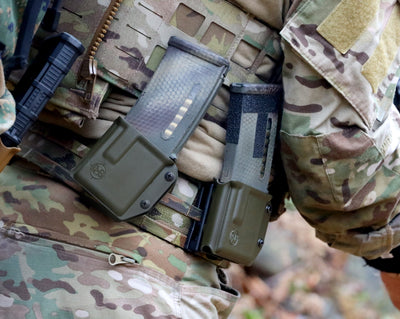
Belt placement matters. A medical pouch should be positioned on the support side, opposite the holster, to avoid interference with the draw stroke. Appendix carry pairs naturally with a support-side 9 o'clock medical pouch. The first 60 seconds of a trauma response are the critical window. An on-body IFAK, not a bag in the car, is the only configuration that meets that timeline.
Concealment training and basic medical training are the two most impactful skills a church security volunteer can develop. Firearm proficiency means little if the volunteer cannot stop bleeding in the aftermath.
Legal Compliance: Know Your State Before You Carry
Armed church volunteers operate under widely varying legal frameworks, and the landscape is shifting fast. What was legal in your state last year may not be legal today.
California's Senate Bill 1454, effective January 1, 2025, removed exemptions that previously allowed churches and nonprofits to operate volunteer security teams outside formal regulation. Armed roles in California now require a Private Patrol Operator (PPO) license.
Florida is moving in the opposite direction. Senate Bill 52, which passed the Florida Senate unanimously in February 2026, would authorize houses of worship to use armed volunteers without requiring a professional security license. This reflects a broader national legislative trend toward empowering church self-defense.
Volunteers must verify their state's current statute before carrying on church property. Laws are actively changing in 2025 and 2026. Church leadership should consult legal counsel and establish a written security policy that documents volunteer authorization, training requirements, and liability coverage. The best holster in the world does not protect a volunteer who is carrying without lawful authorization in their jurisdiction.
Build Your Church Security Loadout: A Practical Checklist
- Carry position: Select AIWB or strong-side IWB based on body type, attire, and role. Train that position exclusively. Do not switch between indoor and outdoor phases.
- Retention level: Level I passive Kydex for concealed volunteers. Level II if you patrol openly or may engage in physical confrontation.
- Holster: Precision-molded Kydex with a defined retention click, low-profile clip, and optional claw/wing for concealment. Avoid soft holsters that collapse during reholstering.
- Belt: Rigid gun belt rated for your firearm's weight, 1.5-inch minimum. A dress belt is not a gun belt.
- Medical: Support-side IFAK with tourniquet, hemostatic gauze, and chest seal, carried on-body, not in a bag.
- Training: Practice drawing from a seated position, from formal attire, and from a standing patrol posture. All three scenarios are realistic for a church security volunteer.
- Legal: Verify your state's current statute on armed church volunteers before your first shift, and review it annually as legislation evolves. Consult legal counsel.
- Faith and mission: Carry with the conviction of Romans 13:4. The role of protector within a congregation is a calling that demands the best gear, the best training, and the right mindset.
At C&G Holsters, our team of U.S. Military Veterans, LEOs, and competitive shooters builds every holster to the standard we carry ourselves. The calling to protect your congregation deserves gear that will not let you down when it matters most.
Sources
- Christian Warrior Training — FBI 2025 Active Shooter Report Analysis
- Daily Citizen / Focus on the Family — Family Research Council 2024 Report
- Rough Notes — 2023 Lifeway Research Survey
- Crime Prevention Research Center — CrossPointe Community Church Incident
- Christian Warrior Training — 2025 Church Violence Tracking
- Omnilert — Church Shootings in America
- CCW Safe — Handguns for Church Security Team Members
- C&G Holsters — COVERT/ALPHA Kydex Holsters
- Trace Armory Group — Best Church Security Gear
- MED-TAC International — Church Safety Medical Plan
- Church West — California SB 1454 Compliance Guide
- Fox News — Florida SB 52





Leave a comment