


Choosing your first concealed carry holster is one of the most important decisions you'll make as a new shooter. Here at C&G Holsters, we build two purpose-driven Kydex holster lines for everyday carry: the OWB COVERT (outside the waistband) and the IWB COVERT (inside the waistband). Both are CNC-machined from custom aluminum molds, built by American veterans and law enforcement professionals, and backed by a lifetime guarantee. The question isn't which one is "better" in the abstract; it's which one fits your life, your wardrobe, and your carry goals right now.
At a Glance
| Dimension | OWB COVERT | IWB COVERT |
|---|---|---|
| Carry Position | Outside the waistband | Inside the waistband |
| Construction | Kydex clamshell design | .08" Kydex taco-shell design |
| Concealability | Good with a cover garment (jacket, hoodie, flannel) | Excellent; conceals under a single untucked shirt |
| Comfort for New Shooters | More comfortable out of the box; no waistband pressure | Slight learning curve; very comfortable once adjusted |
| Draw Speed & Training | Easier, more natural draw stroke for beginners | Slightly more practice needed; still fast once trained |
| Adjustability | Adjustable cant and ride height (7 screw holes); 1.5" or 1.75" belt clips; MOLLE option | Single-screw adjustable retention with audible click; optional concealment wing (claw) |
| Optic & Suppressor-Sight Ready | Optic-compatible models available | Factory optic cut + suppressor-sight channel standard |
| Best Seasons | Fall and winter (heavier cover garments) | Year-round, especially summer |
| Options | Quickship & Custom (including mag holder combos) | Quickship & Custom (including mag holder combos) |
| Lifetime Guarantee | Yes | Yes |
Concealability
This is the dimension that matters most for concealed carry, and the IWB COVERT wins it clearly. Because the holster sits inside your pants, your firearm is hidden by nothing more than an untucked shirt. The optional concealment wing (sometimes called a claw) presses the pistol grip flat against your body, which dramatically reduces printing, especially in the appendix (AIWB) position. If you carry appendix, the muzzle points straight down rather than pushing your cover garment outward at an angle, keeping your profile clean.
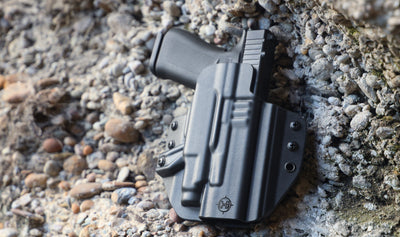
The OWB COVERT is no slouch here, though. Its high-ride, flat clamshell profile makes it one of the slimmest OWB options on the market. Reviewers have confirmed successful concealment under a sweatshirt, jacket, and even a t-shirt in some cases. But you will generally need a dedicated cover garment, and that limits your wardrobe flexibility, particularly in warmer months.
Winner: IWB COVERT
Comfort & Ease of Use for New Shooters
If you've never carried a firearm on your body before, the OWB COVERT will feel more natural on day one. The holster sits on the outside of your belt, so there's no pressure between the gun and your hip. You don't need to size up your pants, and the draw stroke is more intuitive because the grip is fully exposed and easy to acquire.
The IWB COVERT requires a short adjustment period. You may need pants with a slightly larger waist to accommodate the holster, and the feeling of a Kydex shell against your skin (or undershirt) takes a few days to get used to. That said, the .08-inch Kydex is thin enough that most carriers forget it's there after the first week. The single-screw retention system with its audible click also gives new shooters confidence that the firearm is locked in place.
Winner: OWB COVERT (for initial comfort and beginner-friendliness)
Training & Building Muscle Memory
Many firearms instructors, including our own team of LEOs and competitive shooters, recommend that new carriers start with an OWB holster at the range. The open grip access and consistent draw angle let you build clean fundamentals before adding the complexity of drawing from concealment. The OWB COVERT's seven-hole adjustment system lets you dial in cant and ride height so your draw is repeatable every single time.
Once those fundamentals are solid, transitioning to the IWB COVERT for daily carry is straightforward. The retention click gives you clear tactile and audible feedback that your pistol is seated, which reinforces good re-holstering habits.
Winner: OWB COVERT (for range training); IWB COVERT (for daily carry practice)
Features & Adjustability
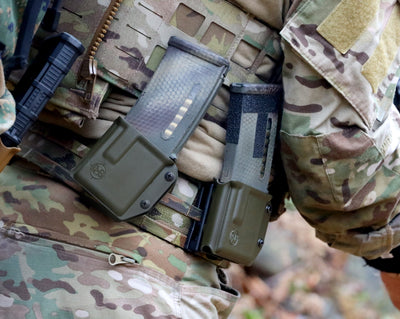
Both holsters are packed with thoughtful design details, but they solve different problems. The OWB COVERT gives you more mounting flexibility: seven screw holes for cant and ride height adjustment, a choice of 1.5-inch or 1.75-inch belt clips, and even a MOLLE attachment option for chest rigs or plate carriers. Smooth, rounded edges eliminate snag points during the draw.
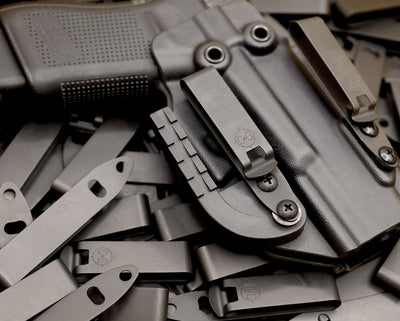
The IWB COVERT focuses on concealment-specific features. The factory optic cut means you won't need to send your holster back if you add a red dot to your pistol. The suppressor-sight channel protects taller aftermarket sights. And the concealment wing accessory is a game-changer for appendix carry, tucking the grip tight against your body where printing would otherwise give you away.
Both lines are available in Quickship configurations (typically shipping within five business days) and fully custom color options. Both also offer magazine holder combo models for shooters who want to carry a spare mag.
Winner: Tie. Each holster leads in the features that matter for its carry method.
Safety
Full trigger guard coverage is a non-negotiable requirement for any carry holster, and both the OWB COVERT and IWB COVERT deliver it. The rigid Kydex shell completely encloses the trigger guard, preventing anything from contacting the trigger during carry or re-holstering. The IWB COVERT's audible retention click adds an extra layer of confidence that the firearm is fully seated. Neither holster compromises here.
Winner: Tie
Durability & Value
Kydex remains the gold standard for holster material in 2026. It resists moisture, retains its shape over thousands of draw cycles, and won't deform from body heat or sweat the way leather can. Both the OWB COVERT and IWB COVERT are CNC-machined from the same premium Kydex using custom aluminum molds, so quality and consistency are identical across the two lines. Both carry our lifetime guarantee. If something goes wrong, we make it right. Period.
Winner: Tie
The Verdict: Which One Should You Buy?
Here's the honest answer: most new concealed carriers will be best served by the IWB COVERT. It's the holster you'll actually carry every day, in every season, under the widest range of clothing. The concealment wing makes appendix carry remarkably effective, the optic cut future-proofs your setup, and the retention click builds good habits from day one. For daily CCW, it's our top recommendation.
That said, if you're brand new to carrying and want to build solid draw fundamentals at the range before committing to inside-the-waistband carry, the OWB COVERT is an outstanding training holster and a legitimate concealed carry option during cooler months when jackets and hoodies are part of your daily wardrobe.
The smartest play? Many experienced carriers own both. They run the IWB COVERT from spring through early fall and switch to the OWB COVERT when heavier cover garments come out of the closet. Starting with the IWB COVERT for daily carry and adding the OWB COVERT for range days and winter carry gives you a complete system built on the same platform, the same quality, and the same lifetime guarantee.
Every C&G holster is made right here in America by people who carry every day. We built these holsters because we trust our lives to them, and we're proud to put them in your hands.





Hinterlassen Sie einen Kommentar