


The Reciprocity Reality Check Every Multi-State Carrier Needs in 2026
According to the Crime Prevention Research Center (CPRC), 20.88 million Americans hold active concealed carry permits as of 2025. A dangerous number of them are unknowingly breaking the law the moment they cross a state line.
The core problem: there is no federal concealed carry reciprocity law as of 2026. Every state sets its own rules. H.R. 38, the Constitutional Concealed Carry Reciprocity Act of 2025, cleared the House Judiciary Committee 18-9 in March 2025 and was placed on the Union Calendar in October 2025, but it has never received a full House floor vote. Its Senate companion, S. 65, has not moved through committee.
This guide covers permit reciprocity, holster-specific compliance, FOPA limitations, and the optimal permit stack for serious multi-state carriers. It is the information law enforcement professionals, veterans, and serious carriers actually need.
Disclaimer: Firearms laws change frequently. Always verify current reciprocity and carry requirements with official state attorney general or state police resources before traveling. This article reflects laws as of October 2026 and is not legal advice.
The Constitutional Carry Misconception That's Getting People Arrested
Twenty-nine states now have constitutional (permitless) carry as of 2026. That number sounds like freedom. It is actually a trap for the uninformed.
The 29 permitless carry states are: Alabama, Alaska, Arizona, Arkansas, Florida, Georgia, Idaho, Indiana, Iowa, Kansas, Kentucky, Louisiana, Maine, Mississippi, Missouri, Montana, Nebraska, New Hampshire, North Dakota, Ohio, Oklahoma, South Carolina, South Dakota, Tennessee, Texas, Utah, Vermont, West Virginia, and Wyoming.
Constitutional carry status grants zero automatic out-of-state carry rights. None. According to the NRA-ILA, 46.8% of Americans (157.6 million people) now live in constitutional carry states, covering 67.7% of U.S. land mass. Many of those residents assume their home-state status travels with them. It does not.
A concrete example: a Texas resident who carries permitlessly at home still needs a valid Texas LTC, or another recognized permit, to carry legally in reciprocal states. In non-reciprocity states, that same Texan has no carry rights at all.
Then there are the states that recognize no out-of-state permits whatsoever: California, Connecticut, Hawaii, Illinois (for general carry), Maryland, Massachusetts, New Jersey, New York, Oregon, Rhode Island, and Washington D.C. Carrying into these jurisdictions on an out-of-state permit is a crime.
Two recent state-level changes add further complexity. Kentucky's HB 312 (effective July 15, 2026) created a provisional concealed carry license for residents aged 18 to 20 who complete an 8-hour course and pass a background check. That provisional license is valid only within Kentucky, with zero out-of-state reciprocity. West Virginia's HB 4106 (effective June 12, 2026) lowered the permitless carry age to 18, but out-of-state permits are still honored only for holders 21 and older.
The Traps Most Carriers Never See Coming
The Resident-Only Permit Trap
Colorado, Michigan, Pennsylvania, South Carolina, and Maine honor permits, but only if the holder is a resident of the issuing state. If you hold a Florida or Utah non-resident permit and assume it works in these states, you are wrong. This catches more multi-state carriers off guard than almost any other reciprocity nuance, according to GoConcealedCarry.
Virginia's SB 115: The Ticking Clock
This is the most underreported reciprocity story of 2026. Virginia currently honors all state permits for holders 21 and older. SB 115 directs the Attorney General to revoke recognition of non-qualifying states by December 1, 2026. Starting July 1, 2027, Virginia will honor only permits from states deemed "substantially similar" to Virginia's standards. If you travel through Virginia, verify your permit will still be recognized before you go.
The Transit State Problem
A Virginia-to-Florida drive through North Carolina and South Carolina requires verified compliance in every transit state, not just the destination. Confirming reciprocity for Florida alone does not cover the states in between.
The Illinois Vehicle Carry Nuance
Illinois honors no out-of-state CCW permits for general carry. However, a non-resident with a valid home-state permit may legally transport a loaded, concealed handgun within their vehicle. The moment you exit the vehicle, the firearm must remain locked inside and out of plain view. This is a narrow exception, not a carry permission.
Magazine Capacity: The Hidden Compliance Trap
Even with a valid permit in a reciprocal state, standard-capacity magazines are illegal in transit states like California, New Jersey, New York, and Massachusetts. USCCA confirms that FOPA provides zero protection for magazine violations. If your route passes through a restricted state, those magazines must stay home.
We have created an expert-curated reciprocity map below, color-coded by tier: full reciprocity, partial/resident-only, no-honor, and constitutional carry. This map reflects laws as of October 2026. Laws change; always cross-reference with official state sources before you travel.
FOPA and LEOSA: Federal Protections That Are Not What You Think
FOPA (18 U.S.C. § 926A)
The Firearm Owners Protection Act provides a safe passage provision for interstate transport. It is not a carry permission. Under FOPA, the firearm must be unloaded, stored in a locked container not readily accessible from the passenger compartment, and the traveler must be in continuous transit between two locations where possession is legal.
FOPA does not allow loaded concealed carry through non-reciprocity states. Period. In New York and New Jersey, FOPA is treated as an affirmative defense. That means you can still be arrested, booked, and charged. You must raise FOPA in court. It is not a get-out-of-jail-free card.
LEOSA (18 U.S.C. §§ 926B and 926C)
For our law enforcement audience: the Law Enforcement Officers Safety Act gives qualified active and retired LEOs a separate federal carry authority that operates entirely differently from FOPA. LEOSA supersedes state reciprocity requirements in most circumstances, but officers must carry their credentials and meet specific annual firearms qualification requirements.
LEOSA does not override all state restrictions. Certain sensitive locations and state-specific rules still apply even under LEOSA authority. Know the boundaries of your federal protection before you rely on it.
Holster Compliance: The Legal Layer Nobody Talks About
Permit reciprocity is only half the equation. Holster type, concealment standard, and trigger guard coverage create a separate compliance matrix that varies by state. Almost no one covers this, but we do because our team lives it.
IWB Concealment Requirements
In strict concealed carry states, the firearm must be completely hidden from view. "Printing" (the outline of the gun showing through clothing) may constitute illegal exposure in states like California, New York, and Illinois. An IWB holster that tucks tight to the body and eliminates printing is not just a preference; it is a legal requirement in many jurisdictions.
Trigger Guard Coverage
Most states that address vehicle carry and concealed carry require the trigger guard to be fully covered by the holster. This is a non-negotiable safety and legal standard. A holster that leaves the trigger exposed is a liability in any state.
OWB and Open Carry
OWB holsters generally fall under open carry regulations, which vary dramatically. As of late 2025, California, Illinois, and New York prohibit open carry altogether, making an OWB setup illegal for carry purposes in those states.
AIWB and Vehicle Carry
Appendix inside-the-waistband carry creates specific compliance questions when transitioning in and out of vehicles. Vehicle carry laws operate independently of permit reciprocity and vary by state on loaded vs. unloaded, holstered vs. stored, and accessible vs. locked requirements.
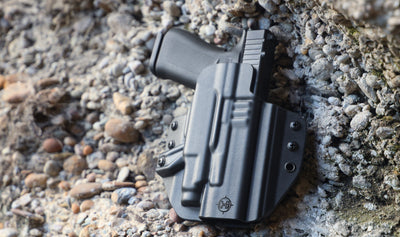
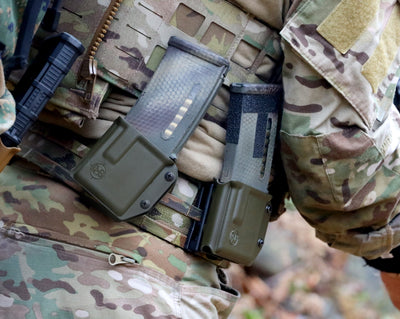
Our IWB COVERT Kydex Holster collection was purpose-built for multi-state carriers who need full trigger guard coverage, complete concealment, and a consistent draw. Available in Quickship (5-day) and fully custom configurations, with options including a magazine holder combo for compliant everyday carry across state lines.
Every C&G holster is CNC-machined from custom aluminum molds for a repeatable, consistent draw. Our founder, a retired Law Enforcement Officer and Master Firearms Instructor, designed these holsters because he understands exactly what multi-state compliance demands. Our design team includes active LEOs and competitive shooters who carry across jurisdictions daily. That lived experience is built into every mold.
The Best Permit Stack for Maximum Multi-State Coverage in 2026
The proven strategy for serious multi-state carriers is combining Florida, Utah, and Arizona non-resident permits. Together, these three cover nearly every reciprocal state in the country.
Here is how the individual permits break down as of early 2026, per GunVera:
- Florida: recognized in approximately 33 states (37+ with some restrictions)
- Utah: recognized in approximately 30 states
- Arizona: recognized in approximately 32 states
- Combined stack: covers 38+ states total
Worth adding depending on your travel patterns: the Texas LTC covers approximately 31 states but is resident-only. The Virginia non-resident permit covers 30+ states and is available by mail, though its future value depends on the SB 115 outcome.
Several states make life easy with universal or near-universal recognition, honoring all valid permits: Arizona, Idaho, Indiana, Kansas, Ohio, and Tennessee. These are the most carrier-friendly states in 2026.
Georgia now recognizes permits from Nebraska and Wyoming as of 2026, reflecting a broader Southeast trend toward expanded reciprocity.
A notable development for younger carriers: Florida's Fourth District Court of Appeals ruled on June 17, 2026 that banning carry licenses for 18- to 20-year-olds is unconstitutional. FDACS will now issue licenses to otherwise-eligible applicants aged 18 and older, expanding the Florida permit's utility significantly.
Practical bottom line: maintain physical copies of all permits, know your LEOSA credentials if applicable, and verify reciprocity for every transit state before any road trip, not just the destination.
Your Multi-State Carry Checklist Before You Cross Any State Line
Before you load up and head out, run through every step below. Skipping even one can turn a routine trip into a felony charge.
- Map every state in your route, not just your destination. Verify reciprocity for all transit states using official state AG or state police resources. A reciprocity map is your starting point, not your final answer.
- Check the resident-only trap. Confirm your specific permit (resident vs. non-resident) is honored in each transit and destination state. Colorado, Michigan, Pennsylvania, South Carolina, and Maine only honor resident permits from the issuing state.
- Verify magazine capacity compliance. If your route passes through California, New Jersey, New York, or Massachusetts, standard-capacity magazines must be left at home. FOPA does not protect you from magazine violations.
- Confirm your holster meets concealment standards. IWB with full trigger guard coverage is the safest multi-state choice. Know whether your carry states prohibit printing.
- Understand vehicle carry rules for each state. Loaded vs. unloaded and holstered vs. locked container requirements vary independently of permit recognition. Research each state on your route.
- Carry your documentation. All permits, LEOSA credentials if applicable, and a printed copy of each state's reciprocity statute for the states you are transiting. Digital copies on your phone are a backup, not a substitute.
- Know your FOPA rights as a last resort. If you must pass through a non-reciprocity state, FOPA requires unloaded, locked, inaccessible storage. It is not a carry permission. In New York and New Jersey, expect to raise it as an affirmative defense if stopped.
Virginia warning: If your route includes Virginia after December 1, 2026, verify your permit is still recognized under the AG's updated list before departure. Do not assume last year's reciprocity still holds.
Carry With Confidence, and With the Right Gear
Knowing the law is the foundation. Carrying the right holster is what keeps you compliant and safe every mile of the journey.
C&G Holsters was founded by a retired Law Enforcement Officer and Master Firearms Instructor. Our team is staffed by U.S. Military Veterans, LEOs, and competitive shooters. This is gear designed by people who carry across state lines professionally, not theoretically.
Verify your permit stack. Review your holster setup for multi-state compliance. Make sure your gear meets the legal standard in every state on your route.
Responsible multi-state carry is not just a legal obligation. It is a duty to yourself, your community, and the Second Amendment rights that 20.88 million Americans exercise every day. Carry smart. Carry legal. Carry ready.
Sources
- Crime Prevention Research Center (CPRC) — Concealed Carry Permit Holders Across the United States: 2025
- Congress.gov — H.R.38, Constitutional Concealed Carry Reciprocity Act of 2025
- NRA-ILA — CPRC's Latest Report Outlines the Robust State of Concealed Carry in America
- ConcealedCarryMap — Concealed Carry Law Changes 2026
- GoConcealedCarry — Concealed Carry Reciprocity: State Recognition Map
- USCCA — Traveling With a Firearm FAQ
- Concealed Carry Inc — Interstate Travel: Understanding Article 926A of FOPA
- LegalClarity — Interstate Travel with Firearms: Federal and State Rules
- GunVera — Concealed Carry Reciprocity Map 2026: Full Guide
- GunLawsByState — 2026 State Gun Laws: Updated Firearm Regulations






Jätä kommentti