


Your Holster Could Be the Most Dangerous Thing on Your Belt
An Associated Press investigation documented 1,422 unintentional discharges across 258 law enforcement agencies since 2012. A peer-reviewed study of 171 of those reports found that 18.5% of routine firearm task unintentional discharges occurred specifically during holstering and unholstering. Not in a gunfight. During routine handling.
A holster has three jobs: secure the firearm, protect the trigger from external contact, and allow safe one-handed draw and reholstering under any physical condition. If any one of those functions is compromised, the holster isn't just underperforming. It's a liability.
Most carriers spend less than five minutes choosing a holster, and that decision carries life-or-death consequences. Here are five signs yours may already be failing you.
Sign #1: Your Holster Has No Audible Retention Confirmation
Positive retention confirmation means one thing: a distinct, audible and tactile click when your firearm fully seats in the holster. That click tells you the weapon is secured. No guessing. No hoping. You know.
Nylon holsters rarely provide this feedback. Worn leather holsters lose it over time. Without that confirmation, your firearm may feel seated, but it isn't locked. A gun that isn't positively retained can rock, rotate, or partially unseat itself during sitting, bending, or running.
This is where Kydex separates itself from every other material. A Kydex holster molded to a specific firearm maintains exact contact points permanently. Retention consistency goes to Kydex without contest. The molded shape holds its form year after year, while leather stretches and softens and nylon offers minimal retention that only deteriorates further with use.
That click isn't a luxury feature. It's confirmation that your firearm is where it needs to be, every single time you holster up.
Sign #2: Your Holster Requires Two Hands to Reholster
If your holster collapses the moment you draw, you have a serious problem. Soft nylon holsters are notorious for this: the holster mouth folds in on itself after the draw, and you need your support hand to hold it open just to get the gun back in. According to Concealed Carry Inc., this creates a dangerous condition where the support hand sweeps in front of the muzzle, or the gun forces the holster open while pointing inward toward the body.
Here's what most people miss: the data shows that most holster-related negligent discharges occur during reholstering, not during the draw, according to Gun Ammo and Gear. Attention is lower. Adrenaline is still running. A collapsed holster mouth can drive a finger onto the trigger as the firearm is forced back in, as documented in a USPTO patent analysis of holster-related discharge mechanics.
A rigid, precision-molded Kydex holster eliminates this failure entirely. The mouth stays open, fixed in shape, ready for safe one-handed reholstering every time. No fumbling. No muzzle sweep. No second hand required.
Sign #3: Your Holster Doesn't Fit Your Exact Gun Model
Universal-fit holsters are engineered to accommodate multiple models. That means they're optimized for none of them. They compromise trigger guard coverage, retention, and draw consistency all at once because they're built to be "good enough" for a range of firearms rather than precise for one.
The tolerances matter more than most people realize. Even a millimeter difference in slide taper or profile affects retention and draw feel.
If you've added a red dot sight or weapon-mounted light to your handgun, your old holster is likely already incompatible. Optics-ready carry has surged in recent years, and generic holsters cannot accommodate these modifications without sacrificing fit.
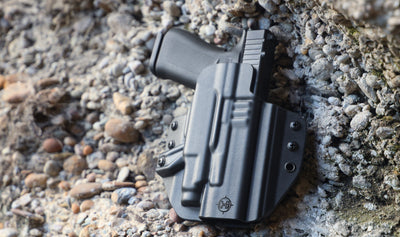
The fix is straightforward: a CNC-molded Kydex holster built to the exact geometry of your specific firearm model, including optic and light cutouts. No compromises on trigger guard coverage. No guessing on retention. One gun, one holster, one precise fit.
Sign #4: Your Draw Feels Different Day to Day
If your draw stroke feels slightly different every time you practice, your holster is failing you in a way that's hard to detect but easy to exploit under stress. The causes are usually a shifting holster body, loose mounting hardware, or worn retention, each of which produces a slightly different grip angle on the draw.
This matters because muscle memory depends on a consistent draw stroke. The repetitions you build in training assume the holster delivers the same presentation every time. When the holster shifts, that trained response degrades at exactly the moment you need it most.
There's a failure mode here that almost nobody talks about: retention screws loosen gradually over time. It happens so slowly you don't notice until the gun shifts or, worse, falls. Leather compounds this problem by stretching with use, altering draw feel over months. Nylon deteriorates even faster, losing whatever shape it started with.
Kydex holds its molded form permanently, and adjustable retention screws let you dial in exact tension. If a screw loosens, you tighten it. You're back to your baseline. That kind of user-serviceable consistency is something leather and nylon simply cannot offer.
Sign #5: Your Holster Is Uncomfortable Enough to Leave Home
Carry discomfort isn't a preference issue. It's a safety issue. A holster that causes pain or constant adjustment leads carriers to leave their firearm at home, eliminating the defensive option entirely. With concealed carry permits climbing to 21.46 million as of 2023 and many states no longer requiring permits at all, more Americans are carrying than ever. Carrying inconsistently, though, is almost the same as not carrying.
Common discomfort sources in poor-fitting holsters include sharp edges, improper cant, wrong ride height, and materials that don't conform to the body. Beyond the pain, persistent discomfort causes constant fidgeting and adjustment, drawing attention to the firearm and breaking the discipline of consistent carry.
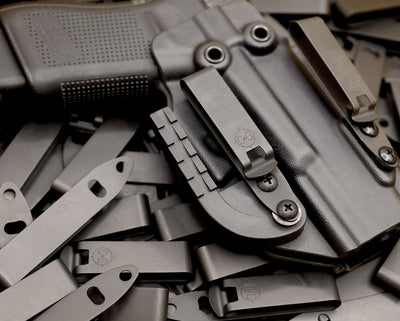
A holster molded to the exact firearm profile sits flatter against the body, distributes weight more evenly, and eliminates the bulk that causes hot spots and pressure points. C&G Holsters' 6th-generation designs, built by U.S. Military Veterans, active Law Enforcement Officers, and competitive shooters who carry daily, reflect real-world comfort refinements that generic manufacturers never make. These aren't design choices made in a conference room. They come from people who wear holsters for a living.
What a Precision-Fit Kydex Upgrade Actually Fixes
Each of the five signs maps directly to a specific Kydex advantage:
- Sign 1 (no retention confirmation): Kydex's permanent molded contact points deliver an audible, tactile click every time.
- Sign 2 (collapsed holster mouth): Kydex's rigid structure maintains a fixed, open mouth for safe one-handed reholstering.
- Sign 3 (wrong fit): CNC-molded Kydex is built to the exact geometry of your specific firearm, including optics and light cutouts.
- Sign 4 (inconsistent draw): Adjustable retention screws let you set and maintain exact tension for the life of the holster.
- Sign 5 (discomfort): Precision-fit Kydex sits flatter, distributes weight better, and eliminates bulk.
Kydex is a thermoplastic acrylic-PVC material originally developed for aircraft interiors. Its durability, moldability, and resistance to moisture and wear made it the dominant material in precision holster manufacturing. Unlike leather, which softens and stretches, or nylon, which deteriorates quickly, Kydex maintains consistent retention even after years of daily use.
The industry data backs this up. Kydex and polymer holsters now account for nearly 42% of new product launches, with retention stability exceeding 20% improvement over leather models, according to Business Research Insights.
At C&G Holsters, founded by a retired Law Enforcement Officer and Master Firearms Instructor, every holster is crafted using CNC aluminum molds and American-made materials. Our Quickship holsters ship within 5 business days, and our fully custom Kydex options cover nearly every handgun on the market. If you've identified any of the five signs above, the upgrade path is clear.
Don't Wait for a Failure to Diagnose One
A holster failure doesn't announce itself. It happens during reholstering, during a run, during a moment of inattention. One documented case involved a worn leather holster that developed a crease pressing against a Glock 19's trigger, causing an accidental discharge that sent a bullet through the carrier's pants, car seat, and door frame, as reported by Houdini Holsters.
Run the five-sign checklist today: retention click, one-handed reholstering, model-specific fit, consistent draw, and carry comfort. If your holster fails any one of those, it's time.
Treat holster selection with the same seriousness as ammunition selection. It is safety equipment, not a commodity. The people and principles you carry for deserve a holster that won't fail them.
Sources
- Associated Press Investigation — Laconia Daily Sun
- PubMed — Further Analysis of the Unintentional Discharge of Firearms in Law Enforcement
- Concealed Carry Inc. — Holster Safety Checklist
- Gun Ammo and Gear — 6 Gun Holsters Explained
- USPTO Patent Document #9488428
- XInsurance — Preventing Accidental Discharges with Concealed Carry
- Business Research Insights — Holster Market Size, Trends & Outlook





Jätä kommentti